(Originally published in Newsweek on November 2, 2006.)
In 1953, my father, Dee Molenaar, went on an expedition created in hopes of making the first successful ascent of the world’s second highest mountain, K-2. The leaders of the expedition, Charles Houston and Robert Bates, chose their teammates not only for their climbing skills, but their ability to get along with others. When the team was finally assembled it consisted of Bates, an English instructor at the University of Pennsylvania and Phillips Exeter Academy; Houston, a medical doctor and graduate of Harvard and Columbia University; Art Gilkey, a doctoral geology student from Columbia University; George Bell, a 6’5″ physicist from Cornell; Bob Craig, a ski instructor from Aspen; Tony Streather, a British officer; Pete Schoening, a chemist from Seattle; and my dad, a Seattle geologist and artist. Most of the men on the expedition were strangers to each other when they met for the first time, but it didn’t take long for them to become friends. They all shared a love of the mountains and the desire to do whatever they could to help the team reach the summit.
But a series of catastrophes kept the team from reaching that goal. During a storm, Art became ill with blood clots in his lungs and as the others tried to maneuver him down a treacherously steep and icy slope to a lower camp, one of the climbers slipped, three ropes tangled, and five men – my dad amongst them – found themselves hurtling down the mountain with no way to stop themselves. Fortunately Pete, the youngest and strongest man on the team, was anchored above them and performed a rope belay – a technique climbers use to stop another climber from falling by winding the rope around a secure object, in this case, an ice axe. The daring maneuver has come to be known as “The Belay” in mountaineering lore, stopping the five falling men from plummeting to their deaths.
As I was born more than three years after “The Belay” I’ve always been personally grateful to Pete for his remarkable feat. And through the years I’ve sometimes thought about the other descendants of the K2 expedition – all of them impacted as I had been by that moment when our fathers had been pulled back from the brink of death. I wondered if the other climbers’ kids felt the same gratitude to Pete that I did. Would we feel the same instant bonds of friendship that our fathers had felt if we ever met?
In 2004 Pete died at 77 after a brave battle with cancer, leaving behind five remaining survivors of the expedition – Bob and Charles, both in their nineties by then, Tony, Bob, and my dad. George had died several years before from complications after surgery, and Art had been swept away by an avalanche on K2 during the expedition. As the men of the 1953 K2 expedition began to pass on, the urge for me to meet their descendants grew.
In 2005, at Pete’s memorial service, I found that his children shared my desire to meet our fellow “Children of the Belay” (or “COB” as I’d dubbed the K2 climbers’ descendants). Soon e-mails were flying from one COB to the next and the idea of a COB get-together began to become a reality.
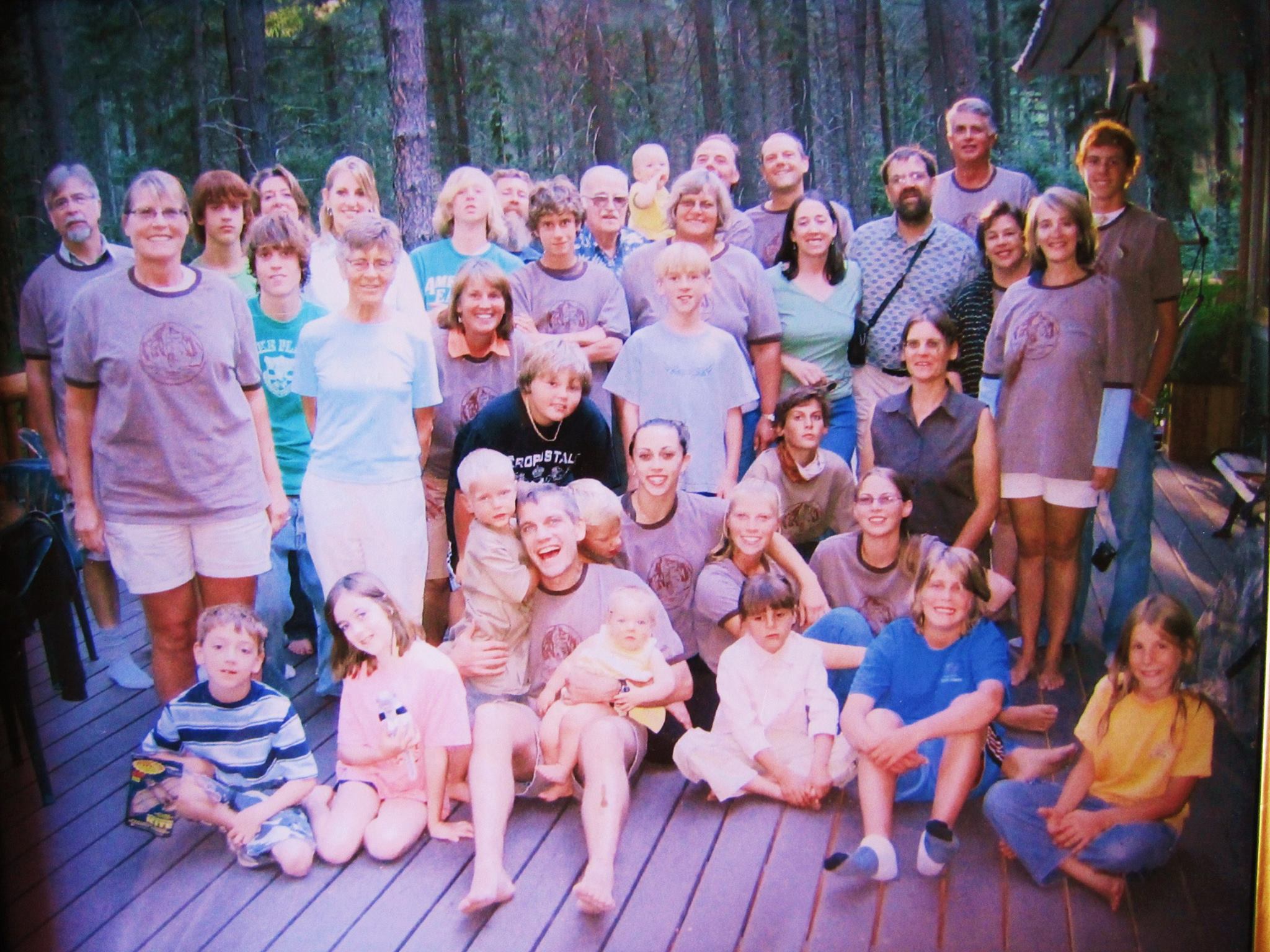
In August, 28 descendants of the expedition members – coming from Germany, New York, Colorado, New Mexico, and Washington State – along with spouses and partners, my dad, and the widows of George and Pete converged on the small town of Leavenworth, Washington.
As my family pulled into Leavenworth, we saw the husband of Kim Schoening, Pete’s daughter, standing on the sidewalk outside the Forest Service Station and he waved us into the parking lot. The lot was bursting with lively, laughing COB. There was George’s daughter, Carolyn, and his son, George, Jr. And there were Pete’s children: Kim, Kristiann, Mark, Lisa, and Eric. I’d never met the Bell offspring until now, but without hesitation I found myself getting out of the car and introducing myself to them, shaking Carolyn’s hand and giving George a hug. It was like we were old friends meeting again after a long separation.
On a hike through the woods to Icicle Creek, we chatted and learned the basics about one another: Jobs, hometowns, educations. Afterwards we ate lunch and then splashed and swam around in the Wenatchee River. There was a young lad there with a wakeboard and we took turns trying to stay upright on the thing. Later we celebrated one of the grand-COB’s birthdays, singing happy birthday to her in honor of her nineteenth year.
But for me the standout experience came that night as we watched videos on the K2 Expedition that had been shown on the BBC. When Pete’s face appeared on the screen a little voice excitedly piped up, “There’s Grandpa!” And it hit me that for the first time in my life I was in a roomful of people who could relate to the story of the expedition in the same way that I relate to it. Here were other spawn of those adventurers, as familiar with the personalities and events of the expedition as I was. As we watched the videos, we all laughed in the same places, and shared the same respect for the courage and camaraderie shown by the climbers. Even the littlest children listened quietly.
The next day, as we prepared to leave Leavenworth, the adieus were bittersweet – although we’d only been together for two days it felt as if I was saying good-bye to family. The members of our fathers’ expedition had gone into the mountains as strangers and had come out as friends. Maybe it’s not surprising that the same was true for their children.
– Karen Molenaar Terrell