Children of the Belay

(Originally published in Newsweek on November 2, 2006.)

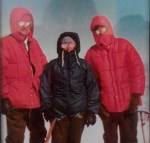
In 1953, my father, Dee Molenaar, went on an expedition created in hopes of making the first successful ascent of the world’s second highest mountain, K-2. The leaders of the expedition, Charles Houston and Robert Bates, chose their teammates not only for their climbing skills, but their ability to get along with others. When the team was finally assembled it consisted of Bates, an English instructor at the University of Pennsylvania and Phillips Exeter Academy; Houston, a medical doctor and graduate of Harvard and Columbia University; Art Gilkey, a doctoral geology student from Columbia University; George Bell, a 6’5″ physicist from Cornell; Bob Craig, a ski instructor from Aspen; Tony Streather, a British officer; Pete Schoening, a chemist from Seattle; and my dad, a Seattle geologist and artist. Most of the men on the expedition were strangers to each other when they met for the first time, but it didn’t take long for them to become friends. They all shared a love of the mountains and the desire to do whatever they could to help the team reach the summit.

But a series of catastrophes kept the team from reaching that goal. During a storm, Art became ill with blood clots in his lungs and as the others tried to maneuver him down a treacherously steep and icy slope to a lower camp, one of the climbers slipped, three ropes tangled, and five men – my dad amongst them – found themselves hurtling down the mountain with no way to stop themselves. Fortunately Pete, the youngest and strongest man on the team, was anchored above them and performed a rope belay – a technique climbers use to stop another climber from falling by winding the rope around a secure object, in this case, an ice axe. The daring maneuver has come to be known as “The Belay” in mountaineering lore, stopping the five falling men from plummeting to their deaths.

As I was born more than three years after “The Belay” I’ve always been personally grateful to Pete for his remarkable feat. And through the years I’ve sometimes thought about the other descendants of the K2 expedition – all of them impacted as I had been by that moment when our fathers had been pulled back from the brink of death. I wondered if the other climbers’ kids felt the same gratitude to Pete that I did. Would we feel the same instant bonds of friendship that our fathers had felt if we ever met?

In 2004 Pete died at 77 after a brave battle with cancer, leaving behind five remaining survivors of the expedition – Bob and Charles, both in their nineties by then, Tony, Bob, and my dad. George had died several years before from complications after surgery, and Art had been swept away by an avalanche on K2 during the expedition. As the men of the 1953 K2 expedition began to pass on, the urge for me to meet their descendants grew.

In 2005, at Pete’s memorial service, I found that his children shared my desire to meet our fellow “Children of the Belay” (or “COB” as I’d dubbed the K2 climbers’ descendants). Soon e-mails were flying from one COB to the next and the idea of a COB get-together began to become a reality.

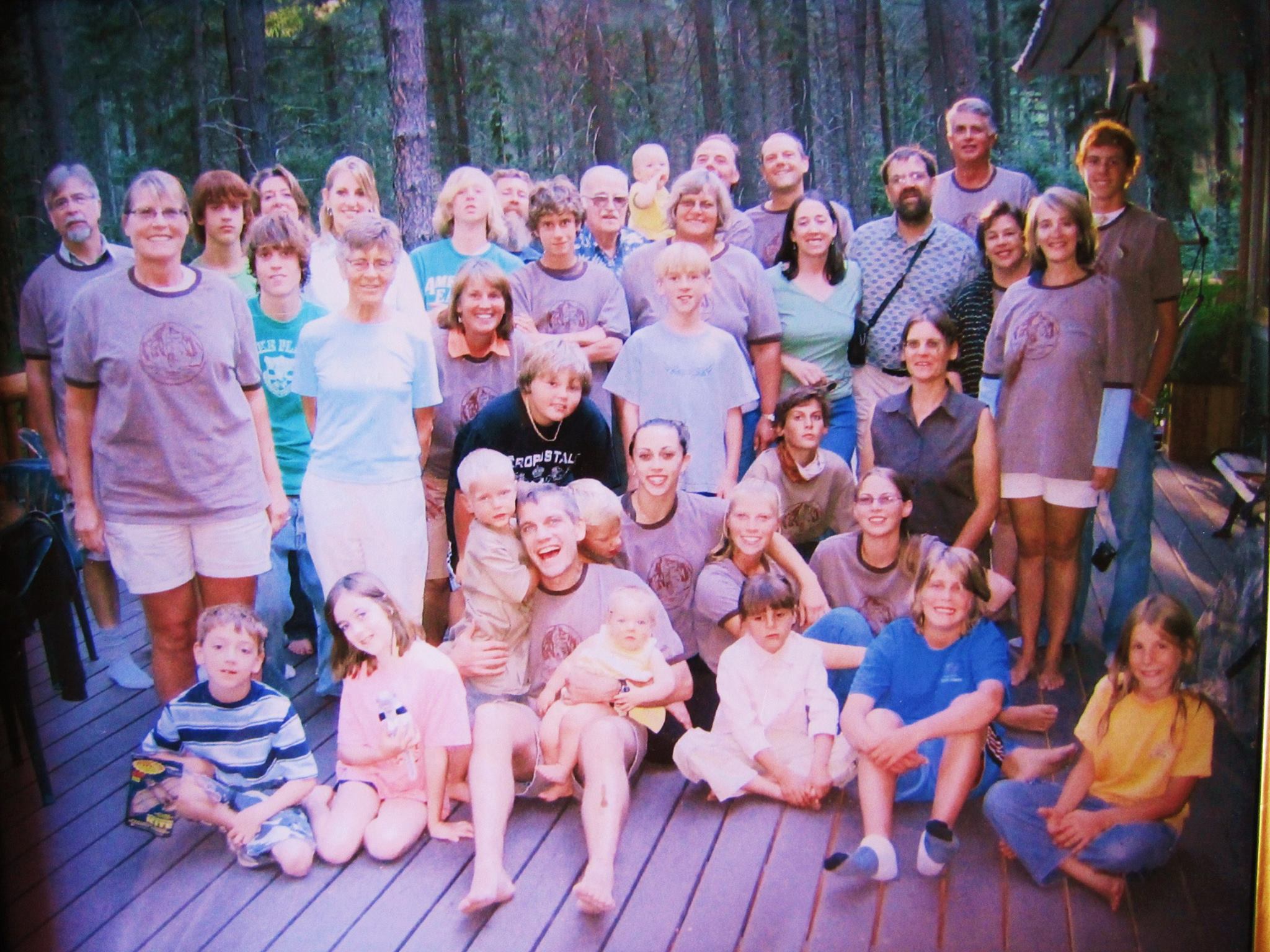
In August, 28 descendants of the expedition members – coming from Germany, New York, Colorado, New Mexico, and Washington State – along with spouses and partners, my dad, and the widows of George and Pete converged on the small town of Leavenworth, Washington.

As my family pulled into Leavenworth, we saw the husband of Kim Schoening, Pete’s daughter, standing on the sidewalk outside the Forest Service Station and he waved us into the parking lot. The lot was bursting with lively, laughing COB. There was George’s daughter, Carolyn, and his son, George, Jr. And there were Pete’s children: Kim, Kristiann, Mark, Lisa, and Eric. I’d never met the Bell offspring until now, but without hesitation I found myself getting out of the car and introducing myself to them, shaking Carolyn’s hand and giving George a hug. It was like we were old friends meeting again after a long separation.

On a hike through the woods to Icicle Creek, we chatted and learned the basics about one another: Jobs, hometowns, educations. Afterwards we ate lunch and then splashed and swam around in the Wenatchee River. There was a young lad there with a wakeboard and we took turns trying to stay upright on the thing. Later we celebrated one of the grand-COB’s birthdays, singing happy birthday to her in honor of her nineteenth year.

But for me the standout experience came that night as we watched videos on the K2 Expedition that had been shown on the BBC. When Pete’s face appeared on the screen a little voice excitedly piped up, “There’s Grandpa!” And it hit me that for the first time in my life I was in a roomful of people who could relate to the story of the expedition in the same way that I relate to it. Here were other spawn of those adventurers, as familiar with the personalities and events of the expedition as I was. As we watched the videos, we all laughed in the same places, and shared the same respect for the courage and camaraderie shown by the climbers. Even the littlest children listened quietly.

The next day, as we prepared to leave Leavenworth, the adieus were bittersweet – although we’d only been together for two days it felt as if I was saying good-bye to family. The members of our fathers’ expedition had gone into the mountains as strangers and had come out as friends. Maybe it’s not surprising that the same was true for their children.

– Karen Molenaar Terrell
When I Thought Climbing Was Normal

At the time it all seemed kind of matter-of-fact normal. I climbed Mount Hood at 15. Climbed Rainier the summer before I turned 21. Climbed Baker the summer before I turned 31. Climbed Adams the summer before I turned 41. And I felt challenged by these climbs, for sure – felt like I’d had to push myself to get to the tops of these peaks – but this is what the people around me did. I guess this was my “normal.” It’s not been until recently that the significance of those climbs has really hit me. And I’m kind of astounded by myself, to tell you the truth. I mean… who did I think I was that I would even CONTEMPLATE climbing those mountains?!!

I’m reading a book by Joe Wilcox right now about his climb of Denali back in 1967. He references Mount Rainier several times in his book – talks about how Rainier is often used to prepare climbers for major expeditions and how it’s used to test the strength and ability of climbers to see if they are fit to climb in major expeditions. A lot of expedition climbers are from the Pacific Northwest because of their experience on Rainier. And most folks who come to Rainier to climb it have probably been preparing for that climb for months or even years. It is a big deal. Apparently.

Here’s how I got to climb Rainier: I was working in the gift shop at Paradise – hiking around up there before and after work – my body was used to the altitude. I was sitting outside after work one evening – looking at the mountain. My friend, Perky Firch, who also worked at the Paradise Visitors Center, was sitting next to me. I said to her, “We’re going to climb that mountain.” She said okay. I called my dad to ask him if he could guide us to the summit, and he agreed to be our guide. Two weeks later we were standing on the top of Rainier.

And the sheer naive confidence of my young self – the fearless innocence of it all – astounds me!

What a blessed life I’ve enjoyed! What opportunities came from being Dee Molenaar‘s daughter! I don’t think I fully appreciated that until now.

-Karen Molenaar Terrell

(Excuse the quality of the photo. I was too lazy to take it out of its frame on the wall.)

Karen on the summit of Rainier – with her father, Dee Molenaar on the left, and her brother, Pete Molenaar, on the right.

Dad’s Backpack

Tomorrow will not only be Father’s Day, it will be my dad’s 97th birthday. My dad, Dee Molenaar, has lived a most amazing 97 years. He was born at the end of World War I, was alive when women got the right to vote, lived through the Great Depression, fought in World War II, saw men walk on the moon, and teared-up with pride for his country the night the first African-American was elected President. He has traveled on six of the seven continents (the only continent he somehow missed was Africa),  climbed on the highest mountains in the world (and, with his climbing team, almost made the first summit of the second tallest one), painted paintings, written books, created maps, had his photos published in National Geographic, and hobnobbed with presidential candidates.

He and Mom are currently in the process of moving out of their home of 48 years. This has involved some down-sizing. Last weekend when I was at their place to help them pack up, Dad gave me the little backpack he’d bought in 1973 for his journey to Europe to climb in the Alps. I cannot tell you how much it meant to me to be able to bring that familiar little pack home with me. I always knew I was safe when I was climbing with the man who wore this pack. This is the pack Dad wore to the summit of Rainier when we’d climbed it together in 1977, and the same pack I’d followed up to the top of Mount Baker ten years later. This is the pack Dad wore when he’d taken hikes with my young sons and myself. There are a lot of fond memories attached to that pack.

For now, it is hanging from a hook in our family room. I know it doesn’t have any special magical powers or anything, but somehow just looking at it makes me feel safe.

Dee Molenaar's pack

Dad’s pack

Preface to Memoirs of a Dinosaur Mountaineer

Preface to Dee Molenaar’s book, Memoirs of a Dinosaur Mountaineer

A light breeze came up the canyon and through the pine boughs overhead, and soon isolated white specks began descending. The snowflakes increased and soon we were encompassed in a flurry that blotted out the semi-arid valley far below, and the trail penetrating the pines below the granite walls high above. In our present light apparel and on a short, leg-stretching hike after motoring from Death Valley 80 miles in the east, our “Old Cronies Expedition” took another prolonged look around, and turned back to the trailhead at Whitney Portal.

It was then that my brother K and I and our friends, George Senner and Bob Johnson, found we were not alone among these rugged mountains.

Coming down through the mists was a lone hiker.

The heavily-bearded, long-haired chap was traveling beneath a bulky backpack that suggested he’d been out for some time. However, the big coil of fiberglass rope tucked beneath a hatchet, a large cast-iron skillet, and soft-toed boots indicated this was no modern-day mountaineer with a fetish for the latest in lightweight travel.

He stopped briefly and we questioned him about his travels. He was originally from Coeur d’Alene, Idaho, and more recently from the Stockton area across the mountains. Tiring of the Bay Area drug scene, he was aiming for a change of pace and was now returning from a trip into the mountains. He talked confidently of his climbing experiences and we enjoyed his free-spirited philosophy before we parted. At a distance through the mist we followed his burdened figure down the trail.

Meeting this hairy 40-ish fellow on the Mount Whitney trail rekindled my thoughts of a half-century earlier – in 1937, a late-summer trip into the Sierras Nevada with my brother K, similarly clad in jeans and carrying unwieldy loads. In that day we also had the trail and the mountain pretty much to ourselves. But in today’s world, had we passed here a couple months later, during the summer’s climbing season, we would have been part of the mountain’s allowable 75 hikers registered daily for the 20-mile roundtrip to the top of Mount Whitney.

How times have changed since those youthful days of the 1930s, during the Great Depression and prior to World War II.

Yet my life since has been a succession of fortuitous circumstances – in many cases being in the right place at the right time and meeting the right person. And though the breaks never made me rich, they provided a bounty of fond memories of fascinating places and events, people and good friends.

– Dee Molenaar