Instructions to a First-time Mom: “Love her. Just love her.”

My mother tells me that when I was born and she held me in her arms for the first time, the weight of the responsibility of raising and caring for me suddenly filled her with great fear. She was so afraid she’d mess it all up somehow.

She looked up at the doctor and shared her fears with him. The doctor smiled at her sweet face and said, “Love her. Just love her.”

This was something my mom knew how to do – and do really well.

My brothers and I may not have had the most conventional up-bringing – but none of us could have asked for a mother with more love in her heart.  We grew up witnesses to how she expressed love to others –  seeing her voice her protest for those who were being treated unfairly, watching her take in stray animals and make them part of the family, seeing how a room would light up as soon as she entered it and smiled her love on everyone. And the love she expressed wasn’t some feigned thing, either. It came from deep inside her – true and pure. She truly loved mankind and all God’s creatures – and we saw this, and incorporated her example into our own sense of how to live a decent and moral life.

As I think back on my younger years, there’s one moment that stands out for me. I think I must have been in my early twenties, and there was some sadness about a break-up with a boyfriend or something – dashed hopes of some kind – I can’t remember the specifics now – but I was feeling lost and alone – not sure what direction I was supposed to take in my life. I was home visiting Mom and Dad, and had gone out into the backyard to look up at the stars and pray. Mom must have known I was out there, and came and stood beside me. I shared my sadness with her then – I think I shared how I was feeling like a “surplus” person – like there seemed to be no place for me. My mom reached over to one of her rose bushes and gently plucked a rose from it and handed it to me. She looked into my eyes and said, “This is you. I see you unfolding into a most beautiful rose.” And then she went back into the house.

Wow. Those simple words, spoken with perfect love, totally reversed my thoughts about myself and my circumstances. Mom loved me. Mom thought I was unfolding like a beautiful rose. How cool is that?!

I’m grateful to say that Mom is still with us here, still loving her fellow creatures, and still an example to us all of how to live a “good” life, and how to be  the best kind of mother.

As an eagle stirreth up her nest, fluttereth over her young, spreadeth abroad her wings, taketh them, beareth them on her wings…” – Deuteronomy 32: 11

A mother’s affection cannot be weaned from her child, because the mother-love includes purity and constancy, both of which are immortal. Therefore maternal affection lives on under whatever difficulties.” – from Science and Health with Key to the Scriptures by Mary Baker Eddy

“I Will” – Singing in the Car with Alison Krauss

I just had a wonderful drive with Alison Krauss. Well, okay, Alison Krauss wasn’t actually in the car with me. But her voice was. And it was lovely.

I was driving home, after a visit with my parents, and just as I got to Seattle big, fluffy snowflakes started floating down around me. It was like being inside one of those glass bubbles that has “snow” trapped inside it.  It was dark, and the snow made it even more difficult to see, but I was suddenly filled with such a sense of peace and joy, that driving felt more like a celebration than a hazard. I’d put an Alison Krauss CD in my car’s CD-player, and, as the snow started falling, her delightful riff leading into the Beatles I Will filled my car with a playfulness and a joy that was almost tangible. I realized that the cars around me were moving in complete harmony with me and with the song – it was like we were all doing a happy dance together – perfectly-timed and choreographed.

“Who knows how long I’ve loved you? You know I love you still…”  I’d always thought those words and that song were romantic – it was a song I’d sung at least once at a wedding. But now I found those words and that song taking on a different meaning for me. My mom’s sweet, smiling face came into focus in my thoughts and I held her there for a moment – just completely filled with the joy of the love we share for each other. Then my dad came through my thoughts, and I mentally hugged him; then my husband, my sons, my co-workers, my bosses, my neighbors, my friends – even those with whom I’d had conflict – one-by-one passed through my thoughts.  And as each new face appeared I mentally wrapped love and joy around my thoughts of that person.  The playful, irrepressible joy of that song, and Krauss’s performance of it, simply could not be overthrown or trampled down. Anger and frustration had no choice but to melt away before the happy onslaught of banjos and love.

It was a transforming experience for me, and when the snow finally stopped falling and the song had ended, I felt like I’d just been privileged to be a part of something magical and wondrous. The feeling of joy still lingers.

Later I thought some more about the song and its words:

“Who knows how long I’ve loved you
You know I love you still
Will I wait a lonely lifetime?
If you want me to, I will.
I love you forever and forever
Love you with all my heart
Love you whenever we’re together
Love you when we’re apart.
And when at last I find you
Your song will fill the air
Sing it loud so I can hear you
Make it easy to be near you
For the things you do, endear you to me
Oh, you know I will, I will”

And it occurred to me that God, Love itself, could sing those words to you and me. How long has God loved us? Forever and ever and for always. She loves us when we’re near Her in our thoughts, and She loves us when we’re not. She loves us when we know Her, and She loves us when we don’t. And we are dear and precious to Her. “I will, I will,” are our Father-Mother God’s words and promise to us. Unconditional, unfailing love is ours to give, and ours to receive.

(Originally posted February, 2012 and now a part of *The Madcap Christian Scientist’s Middle Book*.)


“Even in this place, our lives are worth living.”

We were all absurdly out of place here, like a seahorse in the desert, or a flower on the moon. A dread began to form in my mind, an unformed thought that I was not yet able to verbalize: Life is an anomaly here, and the mountains will tolerate that anomaly for only so long.” – Nando Parrado

***

I just finished reading Miracle in the Andes, by Nando Parrado. This first-person account of the almost-insurmountable challenges faced by the survivors of a 1972 plane crash in the Andes Mountains (first recounted in the book, Alive) was really powerful. I was going to say that reading this book transformed me – but that’s not quite right. Reading about other peoples’ transforming experiences doesn’t really transform us – but it serves to connect us to them. Although few of us have ever experienced the depth of suffering that Nando and his fellow survivors experienced in the Andes, most of us can relate, in at least a small way, to feelings of grief, hopelessness, and the need to “carry on ” even when the odds seem stacked against us. Reading *Miracle in the Andes* was oddly reassuring to me – it made me realize that none of us is alone in our challenges – that others have struggled against odds that seemed impossible, and survived. Reading about Nando’s struggles and incredible perserverance against all odds, helped validate, for me, the lessons and small triumphs of my own life.

I connected to the spirituality of this book. It was written by a man who no longer believes in the traditional God of his religious upbringing. He writes: “…I did not feel God as most people see Him. I did feel something larger than myself, something in the mountains and the glaciers and the glowing sky that, in rare moments, reassured me, and made me feel that the world was orderly and loving and good… It was simply a silence, a wholeness, an awe-inspiring simplicity. It seemed to reach me through my own feelings of love, and I have often thought that when we feel what we call love, we are really feeling our connection to this awesome presence.” A little later, he writes: “It wasn’t cleverness or courage or any kind of competence or savvy that saved us, it was nothing more than love, our love for each other, for our families, for the lives we wanted so desperately to live.”

I guess that’s what stands out for me in this book – this acknowledgement of the power and presence of love, and our connection to our fellow beings. Through all the struggles and challenges, love was the one thing that kept Nando going. He committed to using every ounce of energy left to him to move his body closer to his home and father.

As Arturo Nogueira, a fellow plane crash survivor, tells Nando: “I want you to remember, even in this place, our lives have meaning. Our suffering is not for nothing. Even if we are trapped here forever, we can love our family, and God, and each other as long as we live. Even in this place, our lives are worth living.”

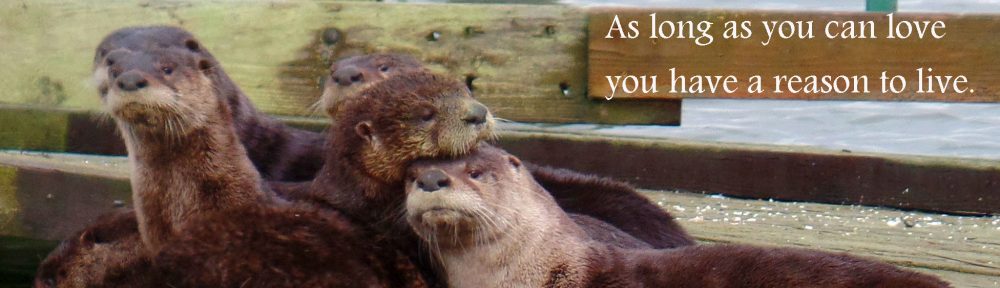
So long as we can love, our lives have meaning. So long as we can love, our lives are worth living.

***

“God is Love. Can we ask Him to be more?”  – from Science and Health with Key to the Scriptures by Mary Baker Eddy


The Great Heart of Love

Come when the shadows fall,
And night grows deeply dark;
The barren brood , O call
With song of morning lark;
And from above,
Dear heart of Love,
Send us thy white-winged dove.

–Mary Baker Eddy

How wonderfully bolstering it is to recognize ourselves surrounded by the playful, joyful, comforting, cozy, warming, light-filled, splendid, unconditional and unchanging presence of Love. Our hearts are thirsty for it. To know we are loved, to know we are valued, needed, and precious gives us hope, bolsters our courage, and supports and inspires us to reach beyond our human sense of limitation and lack. Love gives us a mission, and gives us the resolve, courage, and wisdom to accomplish that mission.

We’ve probably all had times in our life when we’ve felt unloved, unlovable, and unloving. And maybe most of us have at times felt alone, or wondered if we’d ever find someone to share the joys and challenges of life with. I know I’ve experienced those times in my life. But what I’ve found as I’ve grown in my understanding of Love is that if I‘m not so concerned with whether or not people are showing love to me, but instead am focusing my energies on trying to show love to others, I find myself just naturally immersed in love – in a joyous universal celebration of Life.

Love is not dependent on other people, you know? We don’t have to wait for other people to love us, to express love to them. And we don’t have to wait for other people to be somehow “deserving” of our love. Every single one of God’s creations is deserving of love. No exceptions. And no matter what label people have stamped on themselves, or had stamped on them by others, everyone – young, old, monied, homeless, jobless, corporate executive, conservative, liberal, Christian, atheist, Buddhist, pagan, Muslim, Jew – was born deserving of love.

In his wonderful book, The Greatest Thing in the World, Henry Drummond writes: “God is love. Therefore love. Without distinction, without calculation, without procrastination, love. Lavish it upon the poor, where it is very easy; especially upon the rich, who often need it most; most of all upon your equals, where it is very difficult, and for whom perhaps we each do least of all. There is a difference between trying to please and giving pleasure. Give pleasure. Lose no chance of giving pleasure.”

And in the book of Matthew, Jesus admonishes us to love our enemies, to bless those who curse us, and to do good to those who hate us, “That ye may be the children of your Father which is in heaven: for he maketh his sun to rise on the evil and on the good, and sendeth rain on the just and on the unjust.” (Matt 6: 45)

Now I’m not saying it’s always easy to love without discrimination.

I remember, for instance, that the first time I saw the movie Gandhi I was so inspired by the love Gandhi expressed to everyone around him that I decided to be just like him – I was determined that I’d go through the whole next day without feeling animosity or ill will towards anyone else – in the same way that Gandhi did. This lasted about twenty minutes. As soon as the guy in the blue truck cut right in front of me and then proceeded to go under the speed limit, I completely forgot about the pact I’d made with myself. Afterwards, I felt terribly remorseful and discouraged with myself.

But here’s a cool thing: If sometimes we mess up, worry not – Life provides us with limitless opportunities to love. Every moment we have a new opportunity to discover and feel and prove the power of love. Isn’t that awesome?!!!

Drummond writes: “The test of religion, the final test of religion, is not religiousness, but Love… For the withholding of love is the negation of the spirit of Christ, the proof that we never knew Him, that for us He lived in vain. It means that He suggested nothing in all our thoughts, that He inspired nothing in all our lives, that we were once near enough to Him to be seized with the spell of His compassion for the world.”

***

You will find as you look back upon your life that the moments that stand out, the moments when you have really lived, are the moments when you have done things in a spirit of love. – Henry Drummond

The vital part, the heart and soul of Christian Science, is Love. – Mary Baker Eddy

Happy Valentine’s Day! ❤