”I care not what you believe; not one atom do I care; the one important thing for me to know is this – that you are entitled to my compassionate consideration; you are entitled to my respect; you are entitled to my applause for all that you do that is in the right direction. You are entitled to my kindest wishes, to my deepest encouragement; and you are entitled to nothing from me but that which means love and charity and loving kindness, and you must not get anything else from me.” – Edward A. Kimball
I came upon the above quote this morning as I was looking through Kimball’s book, Lectures and Articles on Christian Science, and felt it immediately resonate with me. Kimball’s words ring true, for me, on so many levels.
How many times have discussions about our beliefs led to a place that is the exact opposite of what we espouse to believe? “I believe that God is love,” we might say, and then find ourselves getting all worked up and angry and unloving when someone disagrees with us about our concepts of “God” and “love.”
I don’t think our beliefs and opinions about stuff are important. I think it’s what we DO with those beliefs and opinions that’s important. If our beliefs – whatever they are – lead us to be kinder, gentler and more loving – if our beliefs lead us to express integrity and wisdom in our lives – then they’re cool. If we allow our beliefs to lead us the opposite direction – towards anger, hate, bigotry, and condemnation – that is not so cool.
In Prose Works, Mary Baker Eddy writes: “We should remember that the world is wide; that there are a thousand million different human wills, opinions, ambitions, tastes, and loves; that each person has a different history, constitution, culture, character, from all the rest; that human life is the work, the play, the ceaseless action and reaction upon each other of these different atoms. Then, we should go forth into life with the smallest expectations, but with the largest patience; with a keen relish for and appreciation of everything beautiful, great, and good, but with a temper so genial that the friction of the world shall not wear upon our sensibilities; with an equanimity so settled that no passing breath nor accidental disturbance shall agitate or ruffle it; with a charity broad enough to cover the whole world’s evil, and sweet enough to neutralize what is bitter in it, – determined not be offended when no wrong is meant, nor even when it is…”
And to this, I say “Amen.”
There are hundreds of paths up the mountain, all leading to the same place, so it doesn’t matter which path you take. The only person wasting time is the one who runs around the mountain, telling everyone that his or her path is wrong. – Hindu proverb
A year ago I made some resolutions. I’ve copied and pasted them below. I’d forgotten that one of my resolutions was to read To Kill a Mockingbird – and am happy (and a little surprised at myself) to report that I actually did finally read that fine book and it’s now on my “favorite books” list. You will see that I made others resolutions for 2012, too. We won’t talk about those at this time.
In the last year there have been so many amazing changes in my life, personally – opportunities I never could have expected, wonderful experiences I couldn’t have anticipated, new friends and movies and books and music I didn’t even know existed a year ago. And though there was sadness in 2012, and grief – there was also great joy, and progress. What will 2013 bring? The possibilities for all of us are limitless, really. We’ll discover even more new books and movies and music and new friends, and learn new things, and there will be laughter, for sure, and love.
A Flower unblown: a Book unread:
A Tree with fruit unharvested :
A Path untrod : a House whose rooms
Lack yet the heart s divine perfumes:
This is the Year that for you waits
Beyond Tomorrow s mystic gates.
– Horatio Nelson Power
“…progress is the law of God, whose law demands of us only what we can certainly fulfil.” – Mary Baker Eddy
***
Resolutions for last year (originally posted on the humoristianity.wordpress.com blog a year ago):
I resolve to learn the fine art of being slippery when it comes to resolutions – i.e., I will whole-heartedly endeavor to couch all my words in ways that will make it easy for me to get around actually making resolutions. With this guiding resolution in mind –
1) I resolve to be more patient with the people I want to be more patient with.
2) I resolve to get back that girlish figure – similar to the one I had five minutes ago, before I got it in my noggin that it might be a good idea to eat that entire box of chocolate raspberry truffles. (Note that “girlish” is a relative term here, and can easily be got around when it comes to someone trying to pin me down with specifics – I mean, I very carefully did not say MY girlish figure [which might actually require some work on my part] – but THAT girlish figure – and for all you know I could be describing Buddy Hackett’s girlish figure here. I know. I’m in awe of my lack of resolution, too).
3) I resolve to cut down on the chocolate and Starbucks, and might even think about going a day or two or three without either.
4) I resolve to think about reading Moby Dick. I’ve heard it’s very good. I’m going to resolve to think about reading To Kill a Mockingbird, too. I know. I’m embarrassed to admit I’ve never read that classic. But maybe by this time next year I won’t have to include thinking about reading To Kill a Mockingbird amongst my almost-resolutions.
5) I resolve to think about giving more to the causes that matter, and less to those that don’t. (In other words, politicians and political parties probably shouldn’t waste any more of their money sending me fliers and calling my home.)
6) Segueing from #5: I resolve to really put more thought into my bid for presidency of this greatish nation (ha! – try saying THAT really fast – “greatish nation”).
7) I resolve to know when I have nothing more to say about resolutions and to just shut up.
Wishing all you wonderful Humoristian hooligans a most spectacular new year! May your resolutions be merry and light, and may your new year be bright with possibilities!
” Listen, here’s what I think. I think we can’t go ’round measuring our goodness by what we don’t do, what we deny ourselves, what we resist, and who we exclude. I think we’ve got to measure goodness by what we embrace, what we create, and who we include.” – Pere Henri’s sermon in Chocolat
***
Chocolat is one of my all-time favorite movies. I love the quirky, lovable characters. I love the images of chocolate being sprinkled, melted, molded, and eaten. I love the movie’s wise and wonderful dialogue. I love the setting. I love the… did I mention the chocolate? And I love the movie’s message.
If you’ve never seen the movie, Chocolat (or read the book it’s based on), let me give a brief summary: A young widow moves into a small French town with her daughter, and opens up a chocolate store. During lent. Yeah. Kind of bad timing. The mayor – a judgmental, and obsessively restrained and rigid fellow, inclined to want to control the behavior of everyone around him – is not pleased by her lack of obedience to the dogma of his church. He proceeds to make life difficult for her – trying to coerce the people of his town to shun her and her new business.
And this brings me to the gist of what I want to write about today: exclusivism; elitism; what I call “Country Club Religiousness.” In his wonderful sermon, The Greatest Thing in the World, Henry Drummond reflects on the Biblical analogy of the sheep being separated from the goats on Judgment Day : “I say the final test of religion at that great Day is not religiousness, but Love; not what I have done, not what I have believed, not what I have achieved, but how I have discharged the common charities of life. Sins of commission in that awful indictment are not even referred to. By what we have not done, by sins of omission, we are judged. It could not be otherwise. For the withholding of love is the negation of the spirit of Christ, the proof that we never knew Him, that for us He lived in vain.”
Why do you suppose we sometimes seem to have the need to cast judgment on others? Do you think we feel the need to put others down, shun them, exclude them, and stamp them with labels because we don’t realize our own wonderfulness? – maybe we feel the need to put others down to somehow feel better about ourselves? And do you think that maybe people who join organizations that promote exclusivity are people who have a need to feel like they belong to something “special?” I don’t know. I’m not a trained psychologist or anything, and I could just be (once again) full of baloney about this stuff. Anyway…
We all know what Jesus said about judging others: “Judge not, that ye be not judged. For with what judgment ye judge, ye shall be judged: and with what measure ye mete, it shall be measured to you again. And why beholdest thou the mote that is in thy brother’s eye, but considerest not the beam that is in thine own eye? Or how wilt thou say to thy brother, Let me pull out the mote out of thine eye; and, behold, a beam is in thine own eye? Thou hypocrite, first cast out the beam out of thine own eye; and then shalt thou see clearly to cast out the mote out of thy brother’s eye.” (Matthew 7)
In the Christian Science textbook, Science and Health with Key to the Scriptures, Mary Baker Eddy defines “Church” as “The structure of Truth and Love; whatever rests upon and proceeds from divine Principle.” She writes: “The Church is that institution, which affords proof of its utility and is found elevating the race, rousing the dormant understanding from material beliefs to the apprehension of spiritual ideas and the demonstration of divine Science, thereby casting out devils, or error, and healing the sick.”
Note that Eddy doesn’t say that Church exists as a place to promote dogma, or to judge others. She doesn’t say that the Church exists only for the people who attend service in a material structure, or who obey rules of a human organization. She writes that the purpose of Church is to elevate the “race” – not just some members of the race, but all. She doesn’t write that Church exists to serve itself, but that its purpose is to “raise the dormant understanding” of the human race.
Science is inclusive: The laws and rules of physics don’t belong just to those who call themselves physicists; A geologist can’t exclude anyone else from studying geology – nobody holds exclusive rights to the study of the earth’s surface; The principles of mathematics are universal, and available to everyone who chooses to use them. And, just as geology, physics, and mathematics are inclusive of all mankind, so the Principle of the Christ-Science is universal, and belongs to everyone – nobody has exclusive ownership of Truth; Love, God, doesn’t belong to some people, and not others; A human institution doesn’t hold exclusive rights to Love’s healing power, and can’t prevent any of God’s children from being one with their Father-Mother, Love.
The healing truths found in Christian Science are available to everyone – not just card-carrying members of the Christian Science church. And what good news that is for humanity! 🙂
May our physical housings of Church – our human structures – be perfect manifestations of the “structure of Truth and Love,” and may they be filled with a happy fellowship, inclusive of all.
***
“The members of this Church should daily watch and pray to be delivered from all evil, from prophesying, judging, condemning, counseling, influencing or being influenced erroneously.” – from Church Manual by Mary Baker Eddy
“Whatever furnishes the semblance of an idea governed by its Principle, furnishes food for thought. Through astronomy, natural history, chemistry, music, mathematics, thought passes naturally from effect back to cause… Academics of the right sort are requisite. Observation, study, and original thought are expansive and should promote the growth of mortal mind out of itself, out of all that is mortal.”
– from Science and Health with Key to the Scriptures by Mary Baker Eddy
***
My dad is 94 – he was born in 1918. It’s mind-boggling for me to think about all that he’s witnessed and lived through in his life. He was born near the end of World War I, and two years before women in the United States got the right to vote. He lived through The Great Depression, and served in World War II. He was around for the first radio broadcast, the first flight across the Atlantic, and the first “talking picture.” When he was born people used these things called phonographs to listen to music (I did, too), and typewriters to write stories (me, too!) – and if a writer made a mistake on a typewriter, she couldn’t just “delete” it – she had to type the whole *@#$%* page over again! (Yeah, the exclamation mark indicates some personal experience with this.) Toasters, yo-yos, television (we didn’t get our first TV until I was six or seven), color television (we didn’t get our first color TV until I was a teenager), duct tape, microwave ovens, Velcro, hula hoops, calculators, post-it notes, computers, personal computers, videos, phonographs, liquid paper, DVDs, CDs, i-pods, and our first launch into space and our landing on the moon have all come during Dad’s lifetime. He is a piece of walking history. 🙂
In Prose Works (Miscellany, p. 345), we find an interesting dialogue about science and technology between Mary Baker Eddy, the founder of the Christian Science church, and an interviewer. The interviewer asks Eddy how she feels about the “pursuit of modern material inventions,” and Eddy replies: “Oh, we cannot oppose them. They all tend to newer, finer, more etherealized ways of living. They seek the finer essences. They light the way to the Church of Christ. We use them, we make them our figures of speech. They are preparing the way for us.”
Although I myself have sometimes considered Luddite membership – usually following a skirmish with my laptop’s recalcitrant hardware, or frustration over trying to figure out which icon to push on my new cellphone – this occasional desire to chuck my phone into the nearest river is not something that comes from my study of Christian Science. It’s just me being me.
Christian Science is not at odds with science and technology.
In the Christian Science textbook, Science and Health with Key to the Scriptures, Mary Baker Eddy writes: “The mariner will have dominion over the atmosphere and the great deep, over the fish of the sea and the fowls of the air. The astronomer will no longer look up to the stars, – he will look out from them upon the universe; and the florist will find his flower before its seed.” Eddy published her book in 1875 – almost 100 years before man landed on the moon – yet she seemed able to foretell some of the advances in science that we have come to see. Pretty cool, ay? (Piece of trivia here: The wife and the mother of Alan Shephard, the first guy NASA shot into space, were both Christian Scientists.)
My Christian Science mom (born in 1927) is huge into quantum physics. I don’t mean that she’s formally educated in it or anything (she was a music major – my dad was the one educated in the sciences – he was a geologist) – but the concepts in quantum physics absolutely fascinate her. She’s got tons of books and videos on the subject – and gets great joy from contemplating that stuff.
Unlike my mom, there are Christian Scientists who are actual physicists – and probably some of them are fascinated by the idea that the more you study matter the more you realize how little substance there actually is to it. From what I can gather most of the material world around us is actually filled with electrical fields and there’s more “space” between atoms than there is substance. So really, even from a physically scientific standpoint, matter doesn’t exist, or it hardly exists. (Sort of puts a whole new perspective on Mary Baker Eddy’s thought that matter is illusion, doesn’t it?) 🙂
I’ve often heard people separate religion and science, and talk about the two things like they are mutually exclusive. And I would agree that some religious people do seem to see science as the enemy. Some religious folks have even gone so far as to consciously and deliberately make a war on science – and I find this appalling. (For a really enlightening read on this subject , you might check out wikipedia’s article on The Wedge Document – “The Wedge Document outlines a public relations campaign meant to sway the opinion of the public, popular media, charitable funding agencies, and public policy makers. According to critics, the wedge document, more than any other Discovery Institute project, demonstrates the Institute’s and intelligent design’s political rather than scientific purpose.” http://en.wikipedia.org/wiki/Wedge_strategy)
But Christian Scientists are not creationists or Intelligent Design adherents. We don’t believe the first chapters of Genesis are to be interpreted literally, and don’t believe the world was actually created in seven days and seven nights. (For more about how Christian Scientists view creation, you might want to read the chapter entitled Genesis in Science and Health with Key to the Scriptures.)
In the battle between religious ideology and science, Mary Baker Eddy chose science. In Prose Works, she writes: “On the startled ear of humanity rings out the iron tread of merciless invaders, putting man to the rack for his conscience, or forcing from the lips of manhood shameful confessions, – Galileo kneeling at the feet of priestcraft, and giving the lie to science.”
Mary Baker Eddy believed her discovery of Christian Science to be a scientific one, based on a provable Principle that brings healing to the world. And, even with my own limited understanding of Christian Science, I have been able to prove – to myself – that by resting my thoughts upon this Principle (God, Love, Truth, Life), I can experience healing in a dependable and consistent way.
And I guess this brings us to medical science.
Some of the best, most honorable and intelligent people I know, are medical doctors. They are motivated by a desire to heal the world, to use their intelligence and talents to bring wholeness and well-being to others. And I’m so glad to be able to call a number of them my “friends.” Some of them do remarkable work for their fellow man – and it stems from their love of humanity.
But medical science is not like physics. It’s not an exact science, with dependable principles and rules. Sometimes it works. Sometimes it doesn’t. Sometimes it seems to help people, and sometimes it kills them. Medical scientists cannot make a guarantee that their science will cure its adherents, and that it won’t harm or kill them instead.
In the interview I mentioned earlier, the reporter asks Mrs. Eddy how Christian Scientists should look on health laws of the States regarding infectious and contagious diseases. Eddy answers: “I say ‘Render to Caesar the things that are Caesar’s.’ … knowing… that the fear of catching smallpox is more dangerous than any material infection, I say: Where vaccination is compulsory, let your children be vaccinated, and see that your mind is in such a state that by your prayers vaccination will do the children no harm.” Regarding the use of drugs, Eddy says: “I was dosed with drugs until they had no effect on me. The doctors said I would live if the drugs could be made to act on me. Then homoepathy came like blessed relief to me, but I found that when I prescribed pellets without any medication they acted just the same and healed the sick.”
The drugs we see advertised on television do not seem like something any sane person would want to get tangled up with. Loss of memory, diarrhea, dry mouth, vomiting, thoughts of suicide, depression, liver damage, rashes, death – these possible side effects of drugs do not make me want to run out and get them. I know – call me loopy – but when my health and life are on the line, I’d rather turn to the method of healing that has consistently worked for me, than some lab-tested drug that may or may not cure me, and could possibly kill me. Tested with the scientific method, these drugs may be – but that doesn’t guarantee they’ll work.
Medical research has shown that certain emotions – fear, anger, hate – produce chemicals that can affect your physical health:
– and I think this research on the mind-body connection correlates well to the teachings of Christian Science which include the belief that our state of mind determines our human experience. On the first website I listed above, the research indicates that your emotions play an even bigger role than having basic needs. If I were a medical doctor I think this is the kind of research I’d be interested in studying further. I’d be studying to learn why a placebo is often as effective as the actual drug, and looking into the connection between a person’s thoughts and emotions and their physical health.
Is Christian Science an enemy of science? Nay, nada, nope. Is Christian Science a science? Well, I guess all I can say about that is that in my own personal experience it has provided me with reliable, consistent, dependable results time after time.
“…our sufficiency is of God… Who also hath made us able ministers of the new testament; not of the letter, but of the spirit: for the letter killeth, but the spirit giveth life.” – II Corinthians 3
“SCIENTIFIC interpretation of the Scriptures properly starts with the beginning of the Old Testament, chiefly because the spiritual import of the Word, in its earliest articulations, often seems so smothered by the immediate context as to require explication; whereas the New Testament narratives are clearer and come nearer the heart.” – Mary Baker Eddy (Science and Health with Key to the Scriptures)
***
The Bible is really cool in that it’s a collection of writings from people who lived thousands of years ago and took the time to write down their thoughts and feelings about life – and their writing connects us to them – lets us see that people dealt with the same feelings that we deal with today. There’s joy in those pages, and hope, and great love. There’re stories of self-sacrifice and selflessness and courage – and there’re also stories of obsession and greed and jealousy. And it’s interesting, to me, to see how people dealt with all that stuff – as a society, and as individuals.
But there’s a distinction made in the Bible between the “spirit” and the “letter.” It says in II Corinthians 3 that “the letter killeth” – and I think when people interpret the Bible word-for-word literally they are killing the spirit, the essence, of its meaning. The Bible is chock full of symbolism. Interpreted literally, a lot of it just doesn’t make any sense – it’s full of contradictions and things that are just loopy. Interpreted literally, the story of Adam and Eve has any sane person scratching her head, trying to make heads and tails of talking serpents and a rib turned into a woman and a Creator sending his creation to hell for doing what he made it capable of doing. Interpreted literally, the book of Revelation is a complete nightmare.
And sometimes it might seem really tempting to just throw the whole thing in the trash and be done with it – there is a lot of insanity displayed in The Bible – narrow-mindedness, rigidity, misogyny, tribal warfare, chaos and mayhem and rape and murder and hypocrisy – and I can understand why I’ve sometimes heard people say they hate it.
But when I read The Bible what I see as a history major is the evolution and progress of society and mankind – gradually moving away from a god of war – a vengeful, angry, jealous anthropomorphic god – to God as, literally, Love. When I read the first chapter of Genesis I see the beauty of creation – I don’t get hung up on the whole seven days and seven nights thing – Christian Scientists don’t interpret that chapter literally – what I see is a creation made in God’s image and likeness – beautiful and good and perfect. When I read the story of Adam and Eve, it’s obvious to me that I’m reading an allegory. When I read the songs that David wrote I know I’m reading the words of a man who struggled with the same things I’ve struggled with in my life – I see his flaws and I see his mistakes and his victories, and I see him growing and maturing and I take comfort in that. Jesus’ healings are evidence, for me, of the power of our thoughts, the power of love and good overcoming the challenges we all face – and they give me hope. Revelations is totally symbolic – in my mind, at least – showing the ultimate triumph of the things of the Spirit over the illusions of matter.
I think it’s important to keep what we read in the Bible in context with the culture and times in which it was written – and to view the Bible as a work that’s not static, but dynamic – that shows us a progression from beginning to end. When we read in Leviticus the ruling that adulterous women should be stoned, and “…eye for eye, tooth for tooth: as he hath caused a blemish in a man, so shall it be done to him again” – I don’t see this as an edict of how we should behave today – I see Leviticus as offering us the baseline data – as the “basic information gathered before a program begins… used later to show how far we’ve come…” (http://www.sil.org). When we later see Jesus saving the woman accused of adultery from being stoned, and read his words, “Ye have heard that it hath been said, An eye for an eye, and a tooth for a tooth: But I say unto you, That ye resist not evil: but whosoever shall smite thee on thy right cheek, turn to him the other also” (Matthew 5) – I see the progress mankind has made from the baseline given in Leviticus.
“Ye have heard that it hath been said, Thou shalt love thy neighbour, and hate thine enemy. But I say unto you, Love your enemies, bless them that curse you, do good to them that hate you, and pray for them which despitefully use you, and persecute you; That ye may be the children of your Father which is in heaven: for he maketh his sun to rise on the evil and on the good, and sendeth rain on the just and on the unjust.” – Matthew 5
“There will be greater mental opposition to the spiritual, scientific meaning of the Scriptures than there has ever been since the Christian era began. The serpent, material sense, will bite the heel of the woman, – will struggle to destroy the spiritual idea of Love...” – Mary Baker Eddy (Science and Health with Key to the Scriptures)
“The Scriptures are very sacred. Our aim must be to have them understood spiritually, for only by this understanding can truth be gained. The true theory of the universe, including man, is not in material history but in spiritual development.” – from Science and Health with Key to the Scriptures by Mary Baker Eddy
“…when thou prayest, thou shalt not be as the hypocrites are: for they love to pray standing in the synagogues and in the corners of the streets, that they may be seen of men. Verily I say unto you, They have their reward.But thou, when thou prayest, enter into thy closet, and when thou hast shut thy door, pray to thy Father which is in secret; and thy Father which seeth in secret shall reward thee openly.But when ye pray, use not vain repetitions, as the heathen do: for they think that they shall be heard for their much speaking.Be not ye therefore like unto them: for your Father knoweth what things ye have need of, before ye ask him.”
– Matthew 6
“God is not moved by the breath of praise to do more than He has already done, nor can the infinite do less than bestow all good, since He is unchanging wisdom and Love… God is Love. Can we ask Him to be more?”
– Mary Baker Eddy
***
I know there’s some concern about prayer in school. Some folks are concerned about prayer being taken out of school. Some are concerned about prayer being put in school.
Me? Well, I guess I’m concerned about what kind of prayer we’re talking about here, and who, exactly, would be leading these school prayers. Would this be a prayer the students have to recite out loud? Which religious group’s beliefs would be represented in this prayer? And which god or power would our students be praying to, specifically?
In Science and Health with Key to the Scriptures, Mary Baker Eddy writes: “In divine Science, where prayers are mental, all may avail themselves of God as ‘a very present help in trouble.’” Those prayers that are silent, private, heart-felt, and unspoken – within our mental “closet” – are always available to us. No one can stop us from praying silently. That kind of prayer can never be kept out of our schools. It doesn’t infringe on the conscience or beliefs of other students, doesn’t force anyone else to join in, and doesn’t distract from lessons and learning.
For me, prayer means bringing my thoughts close to the heart of Love and Truth – bringing myself, mentally, into harmony with all that is Good. It doesn’t involve pleading, cajoling, or begging some capricious anthropomorphic being to fix all my problems for me. It doesn’t involve me imposing on some finite god’s time or energies. For me God is, literally, Love – and it’s not at all an imposition on Love to be Love, or on Truth to be Truth.
Mary Baker Eddy writes: “Who would stand before a blackboard, and pray the principle of mathematics to solve the problem? The rule is already established, and it is our task to work out the solution. Shall we ask the divine Principle of all goodness to do His own work? His work is done, and we have only to avail ourselves of God’s rule in order to receive His blessing, which enables us to work out our own salvation.” God’s work is done. And it’s perfect and beautiful and whole. It’s our responsibility to open our thoughts to Good, to enable our thoughts to be receptive to it.
What, exactly, are we praying for? Mary Baker Eddy asks us, “What are the motives for prayer? Do we pray to make ourselves better or to benefit those who hear us, to enlighten the infinite or to be heard of men?” Are we praying for material gifts, for money or material wealth, or status or power? Are we praying to look pious to other people, or are we praying to become better expressions of Good?
“What we most need is the prayer of fervent desire for growth in grace, expressed in patience, meekness, love, and good deeds,” writes Eddy.
For me, prayer starts with gratitude – a recognition of, and appreciation for, all the good in my life.
“Are we grateful for the good already received?” Eddy asks. “Then we shall avail ourselves of the blessings we have, and thus be fitted to receive more.”
I once sent out an invitation to the folks in my community to join me for a sharing-of-good-thoughts meeting. I was joined by an atheist, a Buddhist, a couple of Methodists, and several Catholics – all there to share their healing, inspirational thoughts. At the end of our meeting we joined hands and shared in a moment of silence together. That moment of silence was really powerful. I felt something there – a feeling of communal support and confidence and courage. After our moment of silence we sang that wonderful old anthem of the Civil Rights movement, “We Shall Overcome.” There was hope in those words, and a feeling of surety of the power of Good and Love.
“Hope” is the thing with feathers—
That perches in the soul—
And sings the tune without the words—
And never stops—at all…
– Emily Dickinson
Now faith is the substance of things hoped for, the evidence of things not seen.
. – Hebrews 11:1
***
I never really appreciated “hope” when I was younger. I thought it was kind of a weak thing, to tell you the truth – something born out of desperation and helplessness – a thing that people talked about when they were expecting the worst, but “hoping for the best.” But I’ve come to believe that there are actually two kinds of hope – there’s the kind I just mentioned, and there’s another kind – the kind of hope that expects good, expects the best, and is always open to see answers and solutions, beauty and love, and everything incredible in life – the kind of hope that makes its own “miracles.”
In her book, Science and Health with Key to the Scriptures, Mary Baker Eddy defines “MIRACLE” as “That which is divinely natural, but must be learned humanly; a phenomenon of Science. “ Eddy writes, ““A miracle fulfills God’s law, but does not violate that law…” and she says, “Now, as then (in Jesus’ time), these mighty works (healings) are not supernatural, but supremely natural…We must learn that evil is the awful deception and unreality of existence. Evil is not supreme; good is not helpless; nor are the so-called laws of matter primary, and the law of Spirit secondary.”
The truly hope-filled person isn’t weak, desperate, or discouraged. The hope-filled person is, I think, a person who knows how to recognize all the good around her, and who can open herself up to it, and avail herself of it. The hope-filled person has made the discovery that things always get better, that it really is “darkest before the dawn” and that there is an answer to every problem. Hopeful people are open to the moment, are spontaneous, and joy-filled. The hope-filled person has learned she can trust in, and rely on, God (Good, Love, Truth) every single time. She doesn’t plea, she doesn’t beg, she knows.
For myself, I have found that when I consciously go through life with hope and an expectancy of good it brings a certain “magic” into my day.
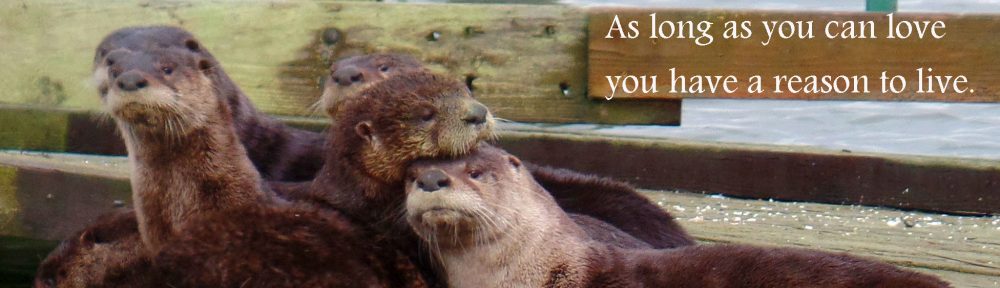
My recent interest in photography has taught me a lot about having an “expectancy of good.” If I go out with my camera, expecting to see magic in every moment, I find treasures all around me. There’s no way I can tell you exactly what I’m going to see on my walks – an expectancy of good doesn’t carry that kind of limitation with it, but is open to everything – I can’t stage the eagles, herons, and otters for myself – but I can know that there’ll be some treasure in every moment that will bring me joy.
There is power in confident hope. There is initiative, rather than inertia; patient waiting, rather than helpless waiting. There is an expectancy of good.
“Declare everything good for yourself; expect everything good now.” – Edward A. Kimball
The time is always right to do what is right. – Martin Luther King, Jr.
My country is the world, and my religion is to do good. – Thomas Paine
When I do good I feel good. When I do bad, I feel bad. That’s my religion. – Abraham Lincoln
Definition for “happiness”: The full use of your powers along lines of excellence. – John F. Kennedy
Let the male and female of God’s creating appear. – Mary Baker Eddy
***
I was once on a discussion board where the question came up: “Where are all the good people?” I was new to the board, and didn’t realize that the poster was asking where all his favorite posters had gone. I wrongly assumed he was actually asking where the “good” people are, and eagerly jumped into the dialogue to tell him: They’re all around us, I posted. They’re everywhere. The good people we mostly hear about are the celebrity-types who donate their time and money to worthy causes, and get their names in magazines and on television for their donations. But there are also, I wrote, many “everyday” people who are what I would call “good” people. They live their lives with joy and humor, stopping to help someone with a flat tire, helping a short person (me, for instance) reach the can of food on the top shelf at the supermarket – without being asked – and looking at the world with courage and hope. “They can be,” I posted, “teachers, doctors, plumbers, secretaries, cashiers, policemen, firemen, Democrats, Republicans, Jews, Muslims, atheists, Buddhists, Lutherans, Baptists, Mormons, Jehovah’s Witnesses, Christian Scientists, Seventh Day Adventists, Methodists, Presbyterians, Episcopalians, Catholics, Wiccans, teenagers, and the elderly.” It is, in fact, my belief that good people can be found in every race, religion, ethnicity, gender, sexual orientation, and age group.
This is when the poster who originally posed the question set me straight and told me that’s not what he’d been asking. There aren’t, he told me, really any good people. He let me know that we’re all sinners, undeserving of mercy, and that it’s only by God’s good grace we’re not all doomed to hell. Or something like that.
I suppose I could have gotten in an interesting discussion with him about the differences in the way we see God’s creation – I could have maybe pointed out that right there, in the very first chapter of Genesis, it says that God created man in God’s “own image and likeness; male and female created he them” and that he saw everything he had made, and, “behold, it was very good.” I could have expressed my belief that it would be impossible for a perfect, all-loving God to create individuals that weren’t also perfectly good, and that it seemed sort of insulting to God to say that her children – made in her image and likeness – were sinners.
But I did not go there.
Instead I started my own thread, and asked people to tell me about the “good people” they’d known in their lives, and that thread became a celebration of the generosity, courage, kindness, intelligence, wisdom, and talent of Good People everywhere.
***
I first started thinking about “The Realm of the Good People” when I was reflecting on my dad’s life. He had been born in 1918 – at the end of World War I. He’d survived The Great Depression with his family, served in World War II, climbed on the highest mountains on earth, been to the South Pole, and close to the North Pole, had moved easily among world leaders, and traveled the world with a close group of fellow adventurers and explorers. He’d worked as a photographer, cartographer, geologist, hydrologist, artist, mountain guide, ski instructor, and author. He’d moved through life with no sense of limitation about what he might accomplish or where he might go or who he might meet, and that – what I guess some might call “naïve” – sense of freedom had served him well in his life.
I had and have huge admiration for the way he’s lived his life. As I type this, he is, at the age of 93, preparing for a trip to Colorado next week to receive an award from The American Alpine club. He’s a little puzzled as to what he’s done to earn this award – but he’s glad to be getting it, and excited about the opportunity to visit with his mountain cronies.
Once I started thinking about my dad and his friends and the world they traveled, I began to look at other people around me – and I realized that there is actually a whole realm of “good people” moving amongst us. Of course, not all of them have had the kind of adventures Dad has had, but their sense of limitless freedom, and the generosity of spirit and courage with which they’ve approached their lives, have lifted them above the mundane and dull, into lives that never cease to inspire me.
My mom, for instance, was born just before The Great Depression, and somehow she and her parents and nine siblings all managed to make it through those challenging times. They came through our country’s economic crisis with a knowledge of how important community is, and how important it is to share with one another. Mom ran track in college, was the first of the eight daughters to graduate from college, climbed Mount Rainier twice, birthed and raised three children, and has lived a long and active life. What makes this all rather remarkable is that as a youngster she’d had rheumatic fever and developed a heart murmur – something I didn’t know about until recently – and I gather she was supposed to have lived a quiet, sheltered life. I like that she didn’t. Beyond all her physical adventures – Mom is the most loving, open-minded person I’ve ever known. She’s one of the “good” ones, for sure.
I am, in fact, surrounded by good people – sons, husband, friends, neighbors. People who, like my mom, have managed to create full, free lives for themselves without regard to the physical limitations conferred upon them by “experts” – or in spite of those limitations. People who, like my dad, failed to recognize that there was anything that was “impossible” to do. There are an abundance of people who, as the wonderful old phrase goes, are “leaving the world a better place for having been here.”
I believe those people are the ones with the real power. Mary Baker Eddy writes, “The good you do and embody gives you the only power obtainable.” I agree with those sentiments. And looking around and seeing all the good in the people around me, I am filled with hope for the world.
This maybe sounds naïve (but then I am my parents’ daughter, after all, and I suppose the fruit really “doesn’t fall far from the tree,” and if I sound a little naïve about what’s possible and what’s not, I guess we can blame my folks) – and I’ve hesitated to put this out there because I know there will be people who will write me off as idealistic and a little loony for saying this – but what the heck? – I’m going to say it, anyway: I really do believe that all of us are “good.” Yes, really. I think what separates people like my dad and mom from others is that they seem to recognize their capability for “good” better than others seem to recognize that ability in themselves. I think we all have the potential to do tremendous good in our lives and in our world – we all have access to incredible power. And when we come to finally recognize that about ourselves and our fellow man, nothing will be impossible to us.
***
God expresses in man the infinite idea forever developing itself, broadening and rising higher and higher from a boundless basis. – Mary Baker Eddy
So God created man in his own image and likeness; male and female created he them. – Genesis 1: 27
Man and woman as coexistent and eternal with God forever reflect, in glorified quality, the infinite Father-Mother God… The ideal man corresponds to creation, to intelligence, and to Truth. The ideal woman corresponds to Life and to Love. In divine Science, we have not as much authority for considering God masculine, as we have for considering Him feminine, for Love imparts the clearest idea of Deity. – Science and Health with Key to the Scriptures, by Mary Baker Eddy
***
As a Christian Scientist, I believe God to be both Father and Mother, and all men and women to be made in her likeness. I believe that if we, as a society, fail to appreciate or value the expression of God’s feminine nature, we’re not appreciating the full expression of our Father-Mother God.
As you probably all know, March is Women’s History Month. Tonight, as I was giving thought to the financial, political, and social challenges that women around the world are currently facing, an old Helen Reddy song came boldly bounding into my thoughts:
I am woman, hear me roar
In numbers too big to ignore
And I know too much to go back and pretend
’cause I’ve heard it all before
And I’ve been down there on the floor
No one’s ever gonna keep me down again
CHORUS Oh yes, I am wise But it’s wisdom born of pain Yes, I’ve paid the price But look how much I gained If I have to, I can do anything I am strong I am invincible I am woman
You can bend but never break me ’cause it only serves to make me More determined to achieve my final goal And I come back even stronger Not a novice any longer ’cause you’ve deepened the conviction in my soul
CHORUS
I am woman, watch me grow See me standing toe to toe As I spread my lovin’ arms across the land But I’m still an embryo With a long long way to go Until I make my brother understand…
– Helen Reddy and Ray Burton
This song was a kind of anthem for me as a young woman. It was one of the songs I hummed to myself as I climbed to the summit of Mount Rainier. It was with me as I launched myself into my career, and it was with me as I tried to figure out my place as a woman in American society. It inspired me to be strong and brave and confident. “I am strong. I am invincible. I am woman,” sang Helen Reddy, and I sang right along with her.
I married, had children, raised a family, entered a teaching career, climbed more mountains and hiked more hills. New songs took the place of I Am Woman. I suppose at some point I began to think of I Am Woman as too simplistic or schmaltzy or shallow or something. And finally I am Woman faded completely into the distant recesses of my mind. Until today, I don’t think I’d thought about that song for years.
But today it came back to me – and it didn’t enter my thoughts in a dainty or delicate way, either – it came bursting in, all unapologetic and vibrant. I found it on youtube and listened to it again, and felt myself becoming inspired, just as I had as a young woman three decades ago.
Biologically, I have brothers, and I have sons, but no daughters or sisters. Although I love all the wonderful men in my life – right now, today, I want to take time to celebrate women. I’ve been blest to have a wise, wonderful mother, and, even though I have no biological sisters, I’ve had a life filled with the inspiration and support of “sisters of the heart” – strong, courageous women who’ve been an example to me of the power of womankind. Today I want to celebrate the courage and daring of the pioneer women who helped build our country; the suffragettes who worked tirelessly so that other women, like me, could vote; and the courageous female leaders who are working right now to ensure that women’s lives and rights are protected.
And I want to make a commitment to being the best representative of womankind that I can be, too. Today I resolve to fully express the courage, strength, and love that are attributes of my Father-Mother God. “I am woman, watch me grow; See me standing toe to toe, as I spread my loving arms across the land…”
***
Christian Scientists must live under the constant pressure of the apostolic command to come out from the material world and be separate. They must renounce aggression, oppression and the pride of power. Christianity, with the crown of Love upon her brow, must be their queen of life. – from Science and Health with Key to the Scriptures by Mary Baker Eddy
…those who discern Christian Science will hold crime in check. They will aid in the ejection of error. They will maintain law and order, and cheerfully await the certainty of ultimate perfection. – Mary Baker Eddy, Science and Health, p. 97
***
A friend posted a great cartoon (by David Sippress) on Facebook the other day. It shows a man and woman walking down the street, and the woman is saying: “My desire to be well-informed is currently at odds with my desire to remain sane.”
I can really relate to this cartoon.
The desire to be a responsible and contributing citizen means that I want to be aware of, and informed about, the challenges my nation faces. But how does one stay informed about these challenges, without feeling overwhelmed by them? Sometimes the fear and hate that seem to permeate our atmosphere can seem impossible to overcome, and I find myself getting pulled inexorably into the brouhaha. I see inequity and unfairness, hypocrisy and bigotry, and it makes me really angry. And the angrier I get the more real and powerful the inequity and bigotry seem to me, and the less powerful I feel in being able to make anything better.
In Science and Health with Key to the Scriptures, Mary Baker Eddy writes: “We may well be astonished at sin, sickness, and death. We may well be perplexed at human fear; and still more astounded at hatred, which lifts its hydra head, showing its horns in the many inventions of evil. But why should we stand aghast at nothingness?” (p. 563)
I can imagine someone reading this quote by Mary Baker Eddy and shaking his head, wondering how anyone can write off all the hate and fear as “nothing.” And I can imagine someone reading this quote and comparing Christian Scientists to those three monkeys who “see no evil, hear no evil, and speak no evil.” But that’s not what Christian Science is about at all.
Eddy writes: “Expose and denounce the claims of evil and disease in all their forms, but realize no reality in them. A sinner is not reformed merely by assuring him that he cannot be a sinner because there is no sin. To put down the claim of sin, you must detect it, remove the mask, point out the illusion, and thus get the victory over sin and so prove its unreality.” (Science and Health, p. 447.)
Note that when Mary Baker Eddy writes about exposing evil and removing its mask, nowhere does she say we do this in a spirit of anger. In fact, earlier in Science and Health, she writes, “The way to extract error from mortal mind is to pour in truth through flood-tides of Love.” (Science and Health, p. 201.)
I believe our purpose here is to love – love is what gives meaning to life. And so it doesn’t really make any sense for me to be angry about anger, or to be unkind in the name of kindness, or to feel hate about those who hate – because anger, hate, and unkindness defeat the whole purpose of it all.
I really like the thoughts Kathi Petersen, a spiritually-minded friend from Nova Scotia, sent me earlier this week: “Is there something wrong with wanting to concentrate your mind and energy on positive things? Are we shirking our responsibilities somehow, not being actively embroiled with the downward tendency of our society? Does it somehow help the planet if we spend our days alarmed and shouting about what is going on? I feel so much that the opposite is true … That what the world needs most is people who can spread some Joy … Maybe every village needs its Joy-spreaders, and we should be given some kind of stipend to concentrate on good and happy things …”
Isn’t that a wonderful idea?!
I want to be one of the Joy-spreaders. I want to completely overpower the feelings of gloom and doom, of hopelessness and anger and fear and hate, with joy and good cheer and love.
I started off this blog with a quote by Mary Baker Eddy. The one word that stands out to me, as I reread it, is the word cheerfully. She tells us that Christian Scientists will “aid in the ejection of error” and “cheerfully await the certainty of ultimate perfection.” Isn’t it great that we don’t need to give up our joy to overcome evil? In fact, maybe the only way we can overcome evil is with joy and love.
***
At all times and under all circumstances, overcome evil with good. – Mary Baker Eddy, Science and Health, p. 571.
The good you do and embody gives you the only power obtainable. – Mary Baker Eddy, Science and Health, p. 192.
 Adventures of the Madcap Christian Scientist