“…unarmed truth and unconditional love will have the final word in reality.”

“I believe that unarmed truth and unconditional love will have the final word in reality. This is why right, temporarily defeated, is stronger than evil triumphant.”
– Martin Luther King, Jr. 

Years ago, when I was a teenager maybe, I remember seeing a Star Trek episode that showed a man who was half-black and half-white in a struggle with another man who was half-black and half-white – they were enemies because of their color – and I remember looking at them, thinking, “But… they’re BOTH half-black and half-white… what’s the issue here?” And at the end of the episode we finally see that the reason they’re enemies is because one of them is white on the right side of his body, and the other is white on the left side of his body, and… yeah… I remember thinking how absolutely ridiculous it all was for them to hate each other just because they were colored differently on different sides. But it is, of course, no more ridiculous than hating someone just because they’re all ONE color, and that color is different than ours.

The summer after I graduated from high school – which was about ten years after the Watts Riots –  I traveled with my dad to California. Dad had grown up in Los Angeles, and he wanted to revisit his old neighborhood and see his childhood home once again. As we drove the streets to his old home, I noticed that we were the only white faces in a several-mile radius.

Dad pulled up in front of a little house, and his face lit up – “This was my home!” he said, getting out of the car. I followed him to the front door, where an African-American woman wearing a house-dress and a really surprised look on her face, appeared. Dad explained that he’d grown up in this house and asked if he could come in and take a look around and go out into the backyard where he’d played as a child. The woman smiled graciously and opened her door for us and allowed us into her home. I followed Dad through the house and out into the backyard where there was still the avocado tree he remembered from his childhood. He looked around, said it seemed smaller than he’d remembered it, and started talking about the happy years he’d spent in this yard as a child. Then he went back through the house, shook the woman’s hand, and thanked her for letting him re-visit his old home. Still looking kind of surprised to find these friendly white people traipsing through her house, she smiled back at dad, and told him he was welcome and it was no problem at all.

A block or so later Dad pulled into a gas station to fill the tank up, and a black attendant came out to help us (this was in the days before people filled up their own cars with gas). He had that same surprised look on his face as the woman in Dad’s old house. He smiled, and filled up our tank for us, and, as we were ready to leave, said in a friendly way, a big smile on his face, “Come back again!”

Every time I think of this trip through that neighborhood in Los Angeles I start grinning. I’m pretty sure we were the only white people in years who’d come nonchalantly driving through that section of Los Angeles. I remember the surprised hospitality of the gas station attendant and the woman living in Dad’s old house, and it fills me up with a kind of joy. I remember my dad – totally oblivious to the fact that he was in a part of Los Angeles that most white people might find threatening – happily traveling down “Memory Lane”, shaking hands with the woman in his old house, greeting the gas station attendant with an open, natural smile – and it makes me really proud to be his daughter.

I am, likewise, proud to be my mother’s daughter. When I was a little girl – maybe eight or so – Mom took my little brothers and me shopping at the local mall. As we were looking at clothes a young African-American family walked by, also shopping. A large middle-aged white man standing near us turned to Mom and said something like, “Those people should stay in their own part of town.” My mom looked up at him, puzzled – she didn’t know what he was talking about at first. He pointed to the African-American family and repeated what he’d said. When my mom finally understood what he was talking about her face turned red with indignation. She looked up at him from her height of 5’2″ and, her voice shaking with emotion, said, “That family has as much right to be here as you or me! We are all God’s children!” The white man realized then that he’d picked the wrong person to share his racism with, and sort of stepped back and disappeared from the store.

I’m really grateful to have been raised by parents for whom  the color of peoples’ skin was a  non-issue, and kindness towards everyone was considered natural and normal.

Thou to whose power our hope we give,
Free us from human strife.
Fed by Thy love divine we live,
For Love alone is Life;
And life most sweet, as heart to heart
speaks kindly when we meet and part.
– Mary Baker Eddy

“The time is always right to do what is right.” 
– Martin Luther King, Jr. 

Would that not be cool?!

Image

what-can-we-do-to-help

This Is Murder

Do you know that there are people who will, literally, die if the Affordable Care Act (Obamacare) is repealed? Literally. Die. I know of at least one friend – a young person, beautiful, intelligent, amazing – who has been told by her medical team that if the ACA is repealed she has four options: 1) move to another state 2) move away from her home and family, and into a nursing home 3) pay for everything out-of-pocket – which would bankrupt her family (it would cost more than a million dollars a year) or 4) go into a hospice and wait to die. Basically, people like my friend – who want desperately to live – are being forced to face the fact that their political representatives don’t give a rip if they live or die, so long as their rich corporate buddies can make a profit.

The United States is the only industrialized nation that has for-profit health insurance. It is shameful. It is murder.

I myself rarely use the health care insurance that I’m enrolled in. But, as a member of a community, and as a responsible citizen, I have no problem contributing to a pot of money that will help others who find themselves in the same circumstances as my friend. There are ways we can provide for each other as a community that we can’t provide as single individuals. I can’t give my beautiful young friend the hundreds of thousands of dollars a year she needs to survive – but I can share my part of a collective health insurance pot with her, and I’m happy to do so.

Go out there and work your magic!

My dear Humoristian hooligans-

If ever the world needed your kind-hearted sass and your good-natured love of humanity it is now. We are living in interesting times, for sure – but you were made for these times – and the world needs what you have to offer. May your love and courage touch and uplift all you meet today. May your sense of humor lighten the burden of those who are athirst for joy in a desert of responsibility and solemnity. May your smile be contagious, and your joy transforming.

Go out there and work your magic!
Karen

“I make strong demands on love…”

Image

no-sugar-tong-love

Nothing I need to add to this one…

I was looking through old drafts in my wordpress file, and came upon this quote:”I care not what you believe; not one atom do I care; the one important thing for me to know is this – that you are entitled to my compassionate consideration; you are entitled to my respect; you are entitled to my applause for all that you do that is in the right direction. You are entitled to my kindest wishes, to my deepest encouragement; and you are entitled to nothing from me but that which means love and charity and loving kindness, and you must not get anything else from me.” – Edward A. Kimball

And I can’t think of anything else I need to add to that.

Things that make Christian Scientists look weirder than we already are (so let’s stop doing them, m’kay?)…

If we would open their prison doors for the sick, we  must first learn to bind up the broken-hearted. If we would heal by the Spirit, we must not hide the talent of spiritual healing under the napkin of its form, nor bury the  morale of Christian Science in the grave-clothes of its letter. The tender word and Christian encouragement of an invalid, pitiful patience with his fears and the removal of them, are better than hecatombs of gushing theories, stereotyped borrowed speeches, and the doling of arguments, which are but so many parodies on legitimate Christian Science, aflame with divine Love. – from Science and Health with Key to the Scriptures by Mary Baker Eddy

My dear Christian Science friends,

I humbly suggest that there are things we should consider NOT doing – because… well… we  ALREADY look weird enough.

1) Instead of saying “I’m feeling ill” we sometimes tell people “I am working on the problem of a belief of sickness…” By the time we finish telling people we’re not feeling well, their toddlers are graduating high school. This is weird.

2) We wonder why we haven’t seen Ed in church for a year, and then finally someone tells us he is “no longer with us.” In other words – he died a year ago, but let’s not talk about it.  This is weird.

3) We can no longer read up-close, but refuse to get glasses because that would be “giving into error.” This is ego and vanity, and it’s also very weird.

4) If we visit an optometrist, dentist, or other medical doctor we feel terrible pangs of guilt and remorse and feel unworthy of Christian Science, and a disappointment to God.  Okay. Listen.  God doesn’t give a hoot about that stuff, one way or the other. When we try to attribute human emotions and feelings and judgment to God we are anthropomorphizing God – trying to make God man-like. God is unchanging Love, Truth, and Life, and nothing we do or say or think or believe is going to change the nature of God, or Her love for us. So please, friends,  stop doing that guilt thing! It is really weird.

5) When we catch someone using improper Christian Science-ese in conversation (refer back to #1), we sometimes seem to feel it is our duty to lob an earnest, lengthy, preachy lecture upon them “correcting” their thought and setting them back on the right path. We sometimes do this to non-Christian Scientists, too. Heck, I’ve seen Christian Scientists doing this to people they’ve never even met before. This is a little off-putting. It’s also totally weird.

6) When someone tells us they’re hurt, to state “there is no sensation in matter” and then  ignore the person who’s come to us for human comfort does not seem to me very Christianly or Scientific . Please take whatever human steps you can take to help or comfort someone who’s come to you in need.  Dismissing someone who’s hurt or sick with the words “there is no sensation in matter” is kind of lazy, not very loving, and really, really weird. Although we can, and should, see the truth – the perfection of God and Her creation – when confronted with a picture of injury or sickness – that is our job as Christian Scientists – Mary Baker Eddy tells us in Science and Health with Key to the Scriptures: “The tender word and Christian encouragement of an invalid, pitiful patience with his fears and the removal of them, are better than hecatombs of gushing theories, stereotyped borrowed speeches, and the doling of arguments, which are but so many parodies on legitimate Christian Science, aflame with divine Love.”

7) Long meetings about whether it’s okay for a reader to thank a soloist after her solo; whether we should be allowed to read from any bible but the King James Bible in church; whether we should call ourselves “Christian Scientists” or “students of Christian Science”;  whether we should refer to Mary Baker Eddy as “Mrs. Eddy” or “Eddy”; whether we should exclude people from membership in our branch churches because of their sexual orientation, or because they use medication, or because they haven’t ascended, yet; whether we should allow any kind of accompaniment but an organ; what readers should wear on the platform; and etcetera, are all, in my opinion, a colossal waste of time and a distraction from the real mission of Christian Science, which, I believe is the transformation of our world through the power of God, Love.  To expend a huge amount of time on human fussiness and opinion and narrow-minded nonsense, instead of on the healing work that Jesus demanded of his followers, is a terrible shame. It is also beyond weird.

8) We sometimes walk around with a kind of smugness about ourselves as Christian Scientists – like our religion owns the power of Love and Truth. We sometimes seem to be especially smug if generations in our family have been practicing Christian Science. Or if we’ve gone to private Christian Science schools. Or our parents or grand-parents held official positions in the Christian Science church – like CS is something we somehow inherited from our parents and grandparents.  Umm…. no, the power found in Christian Science is not genetic – it’s not like the midi-chlorians that “run strong” in the family of Luke and Leia of the Star Wars movies.  Christian Science is available, equally, to all of God’s children – no one has more access to the power of Love than anyone else. And to think that we do is just completely weird.

9) And if you’ve read this post, and none of the things I’ve mentioned that make us look weird seem weird to you… well… that is just…yeah, weird.

In his book, Rolling Away the Stone, Stephen Gottschalk writes: “…after the death of their founder, Christian Science became to a significant degree routinized… Eddy appears to have anticipated with great apprehension that the Christian Science church… would settle down into a kind of bland predictability when she was no longer on the scene. To her, being a Christian Scientist in any meaningful sense involved not only a strong commitment but, in a sense, a spirit of adventure.” And Gottschalk quotes William F. Hillman as writing: “The awakened Christian  sees Christian Science as a means for coming into the full truth of being – the full awareness of God… It turns man away from system, dogmas, formal creeds, to God… Christian Science describes Mrs. Eddy’s experience of God. It is not a theory about God or speculation about Him… it is this experience we are after and not some understanding of a system. ”  Gottschalk writes: “The readiness to plunge ahead, to leave behind what had been outgrown, to move in a new direction before it could be fully determined where it would lead – these traits were elements of Eddy’s sensibility… If there is a pattern to her life, it is the recurrence of new beginnings, and new departures.”
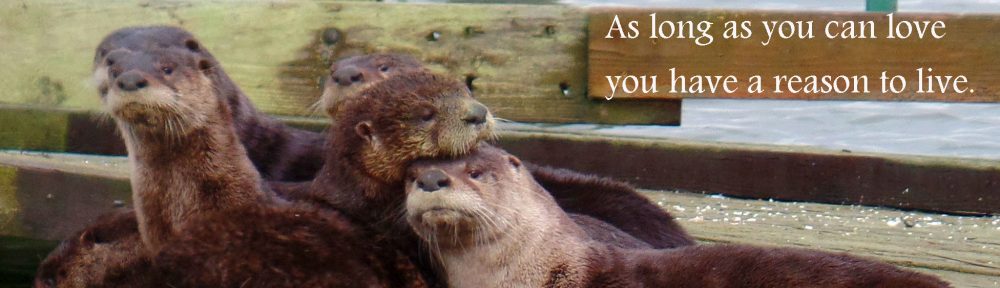
 

The Bad Guys and the Good Guys

Do we see what we expect to see
when we look at one another?
Caricatures of the “them”
and caricatures of  the”us.”
Exaggerated images of
villains and saints – of the
stupid, ignorant, ugly, scary,
evil, threatening, noble, kind,
beautiful, brave, and wise. Cardboard
cutouts of humanity.

We better get them before they
get us, right?


And we build up the hate, and
ignore any efforts at friendship
and cooperation and peace.
Because where’s the fun in that?
Maybe we like being angry. Self-
righteous. Offended.  Frightened.

We better get “them” before they
get “us,” right?

The bad guys are the good guys
and the good guys are the bad guys,
depending on where you’re standing.
If A=B and B=C, then A=C
and the bad guys and the good guys are the same.

But we better get “them” before they
get “us,” right?
– Karen Molenaar Terrell

“Who is thine enemy that thou shouldst love him? Is it a creature or a thing outside thine own creation? Can you see an enemy, except you first formulate this enemy and then look upon the object of your own conception?… Simply count your enemy to be that which defiles, defaces, and dethrones the Christ-image that you should reflect.”
– Mary Baker Eddy


“Don’t look at me. I just got here myself.”

My young friend, Jonathan, gave me the gift of Kurt Vonnegut’s If This Isn’t Nice, What Is? for Christmas. I enjoyed it immensely. I found Vonnegut’s musings on life comforting and reassuring. Vonnegut reminded me that the times we are now entering are not any worse that the times that have come before. And he assured me that – although I maybe can’t fix the whole world – I can, at least, make my little corner of it a more humane and beautiful place.

“I apologize because of the terrible mess the planet is in. But it has always been a mess. There have never been any ‘Good Old Days,’ there have just been days. And as I say to my grandchildren, ‘Don’t look at me. I just got here myself.'”
– Kurt Vonnegut

 “Dr. Vonnegut said this to his doddering old dad: ‘Father, we are here to help each other get through this thing, whatever it is.'”
– Kurt Vonnegut, quoting his son, Mark.

“The teacher… asked me one time, ‘What is it artists do?… They do two things,’ he said, ‘First they admit they can’t straighten out the whole universe. And then second, they make at least one little part of it exactly as it should be. A blob of clay, a square of canvas, a piece of paper, or whatever.'”
– Kurt Vonnegut

“I suggest to you Adams and Eves that you set as your goals the putting of some small part of the planet into something like safe and sane and decent order. There’s a lot of cleaning up to do. There’s a lot of rebuilding to do, both spiritual and physical. And, again, there’s going to be a lot of happiness. Don’t forget to notice!”
– Vonnegut speaking at Butler University.

“My politics in a nutshell: let’s stop giving corporations and newfangled contraptions what they need and get back to giving human beings what we need.”
– Kurt vonnegut

***

“How about Jesus’s Sermon on the Mount, the Beatitudes?

‘Blessed are the meek,
for they shall inherit the earth,
Blessed are the merciful,
for they shall obtain mercy,
Blessed are the peacemakers,
for they shall be called the children of God…’

“For some reason, the most vocal Christians among us never mention the Beatitudes. But, often with tears in their eyes, they demand that the Ten Commandments be posted in public buildings. And of course that’s Moses, not Jesus. I haven’t heard one of them demand that the Sermon on the Mount, the Beatitudes, be posted anywhere.

“‘Blessed are the merciful’ in a courtroom? ‘Blessed are the peacemakers’ in the Pentagon? Give me a break!”
– Kurt Vonnegut

***

“Revenge provokes revenge which provokes revenge which provokes revenge – forming an unbroken chain of death and destruction linking nations of today to barbarous tribes of thousands and thousands of years ago.

“We may never dissuade leaders of our nation or any other nation from responding vengefully, violently, to every insult or injury. In this Age, the Age of Television, they will continue to find irresistible the temptation to become entertainers, to compete with movies by blowing up bridges and police stations and factories and so on…

“But in our personal lives, our inner lives, at least, we can learn to live without the sick excitement… And we can teach our children and our grandchildren to do the same – so that they, too, can never be a threat to anyone.”
– Kurt Vonnegut

***

“When my father was dying, he said, ‘I want to thank you, because you’ve never put a villain in any of your stories.’ The secret ingredient in my books is, there has never been a villain.”
– Kurt Vonnegut

“…I would like to infect people with humane ideas before they’re able to defend themselves.”
– Kurt Vonnegut

“Culture is a gadget; it’s something we inherit. And you can fix it the way you fix a broken oil burner. You can fix it continuously.”
– Kurt Vonnegut

“Persuasive guessing has been at the core of leadership for so long for all of human experience so far that it is wholly unsurprising that most of the leaders of this planet, in spite of all the information that is suddenly ours, want the guessing to go on… Our leaders are sick of all the solid information that has been dumped on humanity by research and scholarship and investigative reporting. They think that the whole country is sick of it, and they could be right. It isn’t the gold standard that they want to put us back on; they want something even more basic than that. They want to put us back on the snake-oil standard again.”
– Kurt Vonnegut

“Our founding fathers never promised us that this would be a painless form of Government, that adhering to the Bill of Rights would invariably be delightful. Nor are Americans proud of avoiding pain at all costs… So it is not too much to ask of Americans that they not be censors, that they run the risk of being deeply wounded by ideas so that we may all be free. If we are wounded by an ugly idea, we must count it as part of the cost of freedom and, like American heroes in the days gone by, bravely carry on.”
– Kurt Vonnegut

“A purpose of human life, no matter who is controlling it, is to love whoever is around to be loved.”
– Kurt Vonnegut

“So the advice I give myself at the age of 71 is the best advice I could have given myself in 1940, when detraining for the first time in Ithaca, having come all the way from Indianapolis: ‘Keep your hat on. We may wind up miles from here.”
– Kurt Vonnegut

“And here’s what I think the truth is: we are all addicts of fossil fuels in a state of denial, about to face cold turkey. And like so many addicts about to face cold turkey, we are now committing violent crimes to get what little is left of what we’re hooked on.”
– Kurt Vonnegut

“Much has been written about the effects on institutions of higher learning of the sudden influx of veterans after my war. One thing it did was bamboozle many teachers whose authority and glamour was based on their having seen more life and the world than their students had. In seminars I would occasionally try to talk about something I had observed about human beings while a soldier, as a prisoner of war, as a family man. I had a wife and kid then. This turned out to be very bad manners, like coming to a crap game with loaded dice. No fair.”
– Kurt Vonnegut

***

Kurt Vonnegut speaking to Joe Heller, author of *Catch-22*:

“‘Joe, how does it make you feel to realize that only yesterday our host probably made more money than Catch-22, one of the most popular books of all time, has grossed world-wide over the last forty years?’

“Joe said to me, ‘I have something he can never have.’

“I said, ‘What’s that, Joe?’

“And he said, ‘The knowledge that I’ve got enough.'”
– Kurt Vonnegut

Freedom of the Press and The Christian Science Monitor

For me, the most important passage in the Constitution of the United States is this one:

Congress shall make no law respecting an establishment of religion, or prohibiting the free exercise thereof; or abridging the freedom of speech, or of the press; or the right of the people peaceably to assemble, and to petition the Government for a redress of grievances.
– First Amendment to the Constitution of the United States

The citizens of the United States need to be informed to be able to carry out their duties and responsibilities. To stay informed we need a press that isn’t owned by corporations or politicians. To stay informed we need members of the press who have the courage to bring the truth to their audience. To stay informed we need a citizenry receptive to what the press has to share, and able to question, for themselves, what they hear, read, and see. 

Mary Baker Eddy, the founder of Christian Science, was witness to the yellow journalism of of the late 1800s and, in 1908, at the age of 87,  created her own newspaper, The Christian Science Monitor, in response. Eddy wrote that the mission of her paper was “To injure no man, but to bless all mankind.” She wrote:

“It is the pulpit and press, clerical robes and the prohibiting of free speech, that cradles and covers the sins of the world,—all unmitigated systems of crime; and it requires the enlightenment of these worthies, through civil and religious reform, to blot out all inhuman codes.  It was the Southern pulpit and press that influenced the people to wrench from man both human and divine rights, in order to subserve the interests of wealth, religious caste, civil and political power.”
– Mary Baker Eddy, Miscellaneous Writings

“When the press is gagged, liberty is besieged; but when the press assumes the liberty to lie, it discounts clemency, mocks morality, outrages humanity, breaks common law, gives impulse to violence, envy, and hate, and prolongs the reign of inordinate, unprincipled clans. At this period, 1888, those quill-drivers whose consciences are in their pockets hold high carnival. When news-dealers shout for class legislation, and decapitated reputations, headless trunks, and quivering hearts are held up before the rabble in exchange for money, place, and power, the vox populi is suffocated, individual rights are trodden under foot, and the car of the modern Inquisition rolls along the streets besmeared with blood.”
– Mary Baker Eddy, Miscellaneous Writings

The passages about the press that Mary Baker Eddy wrote 120 years ago seem timely today, too, don’t they?

A month ago I began a subscription to The Christian Science Monitor. According to the Quora website: “The Monitor has a solid reputation in the industry, especially in the field of international reporting. They hold 7 Pulitzer Prizes for their work in journalism.” And according to Allsides.com: “The Christian Science Monitor has maintained its reputation within the news industry as a well-run, high quality news organization with minimal bias.”

I suppose there are folks who might see the words “Christian Science” in the title of the newspaper and immediately assume the paper has a religious bias… which… actually shows a bias in the person assuming a bias. Right? 🙂

I have really come to appreciate this newspaper in the last month: It is unbiased and fair; It presents news without sensationalism; It presents at least one “feel good” story in each edition that helps give me hope for the world; and it presents me with the information I need to carry out my duties as a responsible citizen of the United States.

Mary Baker Eddy did a good thing when she started this newspaper.