What will happen on December 21st?

“The inaudible voice of Truth is, to the human mind, ‘as when a lion roareth.’  It is heard in the desert and in dark places of fear.”  – from Science and Health with Key to the Scriptures by Mary Baker Eddy

Five years ago, on a discussion forum, I learned for the first time about the belief that the world will end on December 21st.  Someone asked “What will happen in 2012?”

I gave the question some thought, and then answered, “Seriously then? I think mankind is at a crossroads here. We can choose which direction we want to head – towards an Apocalypse (which I swear some people actually seem to be praying for) or away from one. My dad was talking with some friends, once – great, cynical old farts – and one of them said something like, ‘The meek will inherit the earth – sure – because nobody else will want it by the time everybody else is done with it.’ I thought that was funny, and really, really sad, too.  I think we’re at a place in our history where mankind has to learn some lessons, and learn them really fast. The first thing we have to learn is to be kind to our environment. But we need to learn to be kind to each other, too – no matter what beliefs or non-beliefs we each have. We’ve got to give up that whole ‘eye for an eye’ mentality – learn forgiveness, and generosity. I have hope for us. I think there’s a movement of good in the world. I believe Good (Love, Truth) will win in the end.”

I think the world manifests what’s going on in the collective “thought” of mankind. I believe a lack of appreciation for God’s beautiful creation – choosing an accumulation of material “Things” (money and personal possessions) over the expressions of Spirit (the beauty of a clean and healthy environment) is causing mankind some problems.And  I believe if  mankind is full of fear – if people come to expect doom in our future – then doom might be what they see manifested.

A friend of mine was telling me about this book – The Hundredth Monkey – that talks about how this group of monkeys started doing something different in their community and – without ever going to another monkey community – other monkeys in other communities started doing the same thing. It was like the idea, or the thought, was contagious – even without any physical connection between these animals. Anyway, I think thoughts can be contagious – and I think good thoughts can be contagious, too – and if mankind comes to expect good, good will happen.

I believe that if we really want to help our world, we need to stop living in fear. Stop being afraid of each other. Stop being afraid of what the future holds for us.  We need to fill our mental atmosphere with love, joy, and hope – with heaven.  In the book of Luke in the Bible, we read: “And when he (Jesus) was demanded of the Pharisees, when the kingdom of God should come, he answered them and said, The kingdom of God cometh not with observation: Neither shall they say, Lo here! or, lo there! for, behold, the kingdom of God is within you.” And in II Corinthians, Paul says: “…behold, now is the accepted time; behold, now is the day of salvation.”

I don’t think the world has to end, or we have to die, to experience heaven and salvation.  Jesus said the kingdom of God is within us – in our thoughts. If our thoughts are full of hope, joy, and love we’re in heaven right now. Likewise, if our thoughts are full of hate, fear, and anger we’re experiencing hell right here, and right now. In Science and Health with Key to the Scriptures, Mary Baker Eddy has this to say about “Heaven”: “Heaven is not a locality, but a divine state of Mind…” and she defines “Heaven” as “Harmony; the reign of Spirit; government by divine Principle’; spirituality; bliss; the atmosphere of Soul.”

What does our future hold? Good. Our future holds Good.   Nothing can destroy Love or Truth – God – we will always have Good in our future. Count on it. 🙂

Buck up, my friends! It is our duty – maybe the greatest thing we can do for our world – to  stop being afraid. We need to be alert, yes. We need to be aware and we need to be wise.  And we  really need to stop being afraid.

Fear thou not; for I am with thee: be not dismayed; for I am thy God: I will strengthen thee; yea, I will help thee; yea, I will uphold thee with the right hand of my righteousness.  – Isaiah 41: 9-11

“Christian scientific practice begins with Christ’s keynote of harmony, ‘Be not afraid!'” – from Science and Health with Key to the Scriptures by Mary Baker Eddy

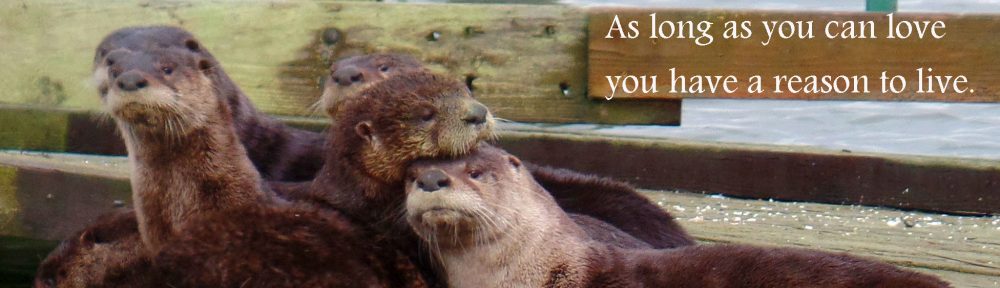
“Where there is love, there is life.”

Heart-breaking. A grief so deep, there are no words. I over-heard someone say: “I bet they’ll find out the mom is to blame.” And THAT crushed me, too. Finger-pointing. Finding someone or something to blame – the young man’s mom, the season, God…

And none of that is going to make things better for the parents of those children who lost their lives. I know the solution isn’t to be found in hate. That’s pretty much the ONLY thing I know for sure right now.

Yesterday I went to my blog, hoping I could find something to say there that might somehow help the people who are grieving the loss of their children – and I found myself reading other peoples’ blogs about the tragedy – everyone in deep shock and mourning.  I realized I wasn’t ready to post anything right then. It felt like anything I had to say would be self-indulgent and me-centered – MY feelings, MY grief, MY horror, MY shock.

Today, I still don’t have the words that are going to fix everything and make it all better.  There are no words that will do that.  But if any of the parents of the children lost in Newtown should stumble upon this blog, I want them to know that they’re not standing in their pain alone – there’s a world full of people who care,  who want to help, who want to reach out and offer what comfort they can – there’s a world full of people who WISH they could fix this, and make it all better.

Mahatma Gandhi said, “Where there is love, there is life.” The love we create with the people in our lives still lives on – even after they’re  no longer with us – nothing can destroy that love. The joy-filled memories of our loves ones – those with us and those no longer with us – we still have those memories, too – no one else’s hatred or insanity can take those from us.  We embrace them, cherish them, and keep them alive.

May the love shared and created, and the memories made,  bring comfort to those who are grieving unthinkable loss right now.

***”

“Death ends a life, not a relationship.” – Jack Lemmon

 “At all times and under all circumstances, overcome evil with good.”  – Mary Baker Eddy

“…I am persuaded, that neither death, nor life, nor angels, nor principalities, nor powers, nor things present, nor things to come, Nor height, nor depth, nor any other creature, shall be able to separate us from the love of God, which is in Christ Jesus our Lord.” – Romans 8: 37-39

Rhonda Lee Rocks! – Bigoted busybody bullying bossy britches brazenly brandishing their bigotry, begone!

Message I just posted on KTBS’s website (which now seems to have disappeared from the page): Rhonda Lee is absolutely beautiful! And her response to the viewer criticizing her length of hair was measured, thoughtful, and well-reasoned. Even HE apparently agreed with her response. Why KTBS should fire this beautiful, intelligent woman is a mystery to me. Unless… of course, now that I see those four white faces in the picture above – three of them with blond hair – I think I have an inkling… bigotry is not a pretty thing. – Karen Molenaar Terrell, a middle-aged white lady from Washington State.

If you haven’t heard about the firing of Rhonda Lee, here’s the link to the story: http://shine.yahoo.com/work-money/meteorologist-rhonda-lee-she-fired-defending-her-hair-200400289.html

And if you’d like a link to the KTBS website, here it is: https://www.facebook.com/KTBS3

I hate bigotry. I mean – I REALLY hate bigotry. Bigoted busybody bossy britches bullies who brazenly brandish their bigotry really toast my cookies. What happened to Rhonda Lee is a prime example of bigotry. But we see it everywhere, don’t we? Any time you see individuals of a particular group being stereotpyped and lumped together and seen as some kind of monolithic entity, you’re seeing bigotry.Whenever I read  sentences about groups of people that start –  “All atheists think…” or “All Christians believe…” or “All Muslims feel…”  or “All gay men want…” –  I can bet that I’m about to read an example of bigotry.  If we want to  understand each other, I do not think it is helpful to lump individuals under one big umbrella and assume we know what all these individuals think, believe, feel, or want. If you want to know what an individual thinks about something – ask him.

I have never felt the need for everybody else to believe exactly the same way I believe about things.  Whatever beliefs others want to hold about life – so long as those beliefs don’t cause harm to others – I’m fine with that. As my dear Aunt Junie used to say: Whatever makes your socks go up and down. I think we’re all drawn to the path in life that makes the most sense to us, as individuals – some of us will be atheists, some of us will be Buddhist, and others of us will be Christian Scientists – and, so long as we’re not tromping on someone else’s rights in our own life journey – it’s all good.

But bigotry DOES harm others, and DOES lead to tromping on the rights of others. When bigots prevent others from their basic human rights – from getting (or keeping) a job, from the freedom of owning a home in the neighborhood of one’s choice, from voting, or marrying, or getting a drink of water from a water fountain – this we cannot support. This is not right, or good, or in any way helpful to the advancement of mankind. This kind of thing must end. We – all of us – as the children of Love – deserve better from ourselves and each other.

***

“The weapons of bigotry, ignorance, envy, fall before an honest heart.” – from Science and Health with Key to the Scriptures by Mary Baker Eddy

“And withal they learn to be idle, wandering about from house to house; and not only idle, but tattlers also and busybodies, speaking things which they ought not.” – I Timothy 5

“Thou shalt not bear false witness against thy neighbour.” – Exodus 20: 16

“Beloved, let us love one another: for love is of God; and every one that loveth is born of God, and knoweth God.  He that loveth not knoweth not God; for God is love…There is no fear in love; but perfect love casteth out fear: because fear hath torment. He that feareth is not made perfect in love. ” – I John 4

How lovely are thy branches…

“There’s nothing more beautiful than a tree,” Alain Le Goff liked to say…

“Look how they’re working …They’re linking the earth to the tree and sunsetsky. That’s very difficult, son. The sky is so lightweight that it’s always at the point of taking off. If there were no trees, it would bid us farewell …You can see that the trunk of a tree is a thick rope. Sometimes there are knots inside. The strands of the rope work themselves loose at each end so that they can fasten onto the sky and the earth. At the top they’re called branches, and at the bottom, roots. But it comes to the same thing.”– Pierre-Jakez Helias, Horse of Pride

I love trees. They give us shade, shelter, and oxygen. They hold the soil to the hillside, fruit on their branches, and our tire swings above the ground.

When I was a little girl I walked home from school by a property that had a line  of little fir trees which were left, unplanted and drying up, next to dusty holes that someone had dug for them. The trees seemed to have been forgotten and abandoned. My heart went out to them. I plucked one of the little firs up and brought it home to Mom. Mom tried to explain that those trees belonged to someone, but it did not compute – it was obvious to me that those trees deserved a better care-giver than the person who had left them, with their little roots drying up in the open air. Mom must have realized that if that tree was going to survive it needed to be planted post haste – so she found me a planter big enough to accommodate a tree’s roots, and provided a home for “Treesa” (the name I gave her). When we moved several years later, we brought Treesa with us and planted her on our new property, where she lived, grew, and prospered. (Treesa’s sister trees – the other little firs that had been waiting with her to be planted the day I walked past them – never did get planted, and didn’t make it.)

Every year a little fir tree on the path along Bellingham Bay slowly begins accumulating Christmas decorations on its branches. Why this particular tree was picked to be the path’s annual Christmas tree, I do not know. But she’s a very jaunty little tree, and it brings me great joy to contribute to her Christmas finery, and to see her all gussied-up for Christmas.

Christmas tree 2

“For ye shall go out with joy, and be led forth with peace: the mountains and the hills shall break forth before you into singing, and all the trees of the field shall clap their hands.” – Isaiah 55: 12

“And he shall be like a tree planted by the rivers of water, that bringeth forth his fruit in his season; his leaf also shall not wither; and whatsoever he doeth shall prosper.” – Psalms 1: 3

green Padden         winter trees in upstate NY 600 year-old tree in Deception Pass, WA      Adirondack winter trees (2) autumn trees            Bellingham tree autumn trees            Padden trees    boy in tree


all photos by Karen Molenaar Terrell

Share this:

An Opinion on Opinions

“There are, it may be, so many kinds of voices in the world, and none of them is without signification…How is it then, brethren? when ye come together, every one of you hath a psalm, hath a doctrine, hath a tongue, hath a revelation, hath an interpretation. Let all things be done unto edifying… If any thing be revealed to another that sitteth by, let the first hold his peace.For ye may all prophesy one by one, that all may learn, and all may be comforted. For God is not the author of confusion, but of peace, as in all churches of the saints.” –  I Corinthians 14

“We should remember that the world is wide; that there are a thousand million different human wills, opinions, ambitions, tastes, and loves; that each person has a different history, constitution, culture, character, from all the rest; that human life is the work, the play, the ceaseless action and reaction upon each other of these different atoms. Then, we should go forth into life with the smallest expectations, but with the largest patience; with a keen relish for and appreciation of everything beautiful, great, and good, but with a temper so genial that the friction of the world shall not wear upon our sensibilities; with an equanimity so settled that no passing breath nor accidental disturbance shall agitate or ruffle it; with a charity broad enough to cover the whole world’s evil, and sweet enough to neutralize what is bitter in it, – determined not to be offended when no wrong is meant nor even when it is, unless the offense be against God.” – from Prose Works by Mary Baker Eddy

***

Opinions. I have them. You have them. The news media has them. The world is filled with them. Sometimes we’re kind of proud of them. Sometimes we walk around all puffed-up about how courageous we are to share them with anyone who will listen (and even with those who won’t). And sometimes we might be inclined to think that if we voice our opinions enough times, they will – poof! – become facts. 🙂

But, sadly, no matter how many times we share our opinions they will remain what they are: opinions. I know. It’s kind of lowering, ain’t it?

When I was a little girl there were some really great news anchors on television – Walter Cronkite, Edward Murrow – these guys had class. You rarely saw them laughing or chatting, or bringing their personalities or opinions to the news. They presented the facts, and let their audience come to their own conclusions about things. They were calm, stable presences on the airwaves. They weren’t timid about questioning authority. Nor were they afraid of exposing evil.

Four principles Edward R. Murrow used in reporting the news were” skepticism, honor, honesty, and courage.”  (http://news.wsu.edu/pages/Publications.asp?Action=Detail&PublicationID=31626&PageID=21) And, it is my opinion, that if we all sought to bring these four principles into our own lives, the world would be a more genial place. in Science and Health with Key to the Scriptures, Eddy writes: “It requires courage to utter truth; for the higher Truth lifts her voice, the louder will error scream, until its inarticulate sound is forever silenced in oblivion.” I think we see a nice example of truth lifting “her voice” in Murrow’s reporting of the McCarthy Hearings in the 1950’s (http://www.youtube.com/watch?v=e4LZsDqSSfk).

In Science and Health with Key to the Scriptures Mary Baker Eddy writes: “In Christian Science mere opinion is valueless. Proof is essential to a due estimate of this subject.” I think in most things, “mere opinion is valueless.” Which. Yeah, I guess that’s just my opinion, though. 🙂

The Christmas Cat

(Originally published on December 19th, 2011)

Yesterday I told you about the Christmas Dog. Today I have a Christmas CAT story to share… 🙂

A few days ago my son came home from his walk with Sam the Dog, to tell me that they’d found a bloodied little calico cat on the side of the road.  She seemed to be injured, wasn’t moving much, had just enough energy to hiss at the dog, but not much energy beyond that. I grabbed a towel (the yellow Pittsburgh Steelers towel my dear in-laws from Pennsylvania sent us several years ago when the Seahaws and the Steelers were duking it out in some bowl game – I figured if any of my towels was going to end up bloody, it might as well be that one) and followed the son to the kitty.

She was curled up on the side of the road, not moving much – except for one twitchy ear. She hissed defensively when I reached down to hold her, but I wrapped her up in the towel so she couldn’t scratch and held her close to me. I told the son to get my car keys and purse and meet me at the car, and I slowly carried the kitty back to our house.

Once I was holding her, she stopped hissing and fidgeting, and when I sat down in the car with her, she relaxed against me, laid her head on my arm and began to purr as I petted her head and ears. As the son drove us to the vet’s I sang the song I’d once sung, years ago, to the Christmas Dog. “Everlasting arms of Love, are beneath, around, above…” (words by John R. MacDuff) and the kitty looked up at me with the same look of trust and love that the Christmas Dog had once shown me.

I’ll be honest, the picture was not pretty. She looked to have been hit in the head by a car. Her jaw was out of alignment, and her eyes were filling up with blood. In my thoughts, I tried to establish who this little kitty was, as an expression of God – tried to establish her in my thoughts as God’s perfect idea, held whole, complete, and untouched by accident, in the consciousness of Love.  What gave me some courage and confidence about the whole situation was the kitty herself – she seemed totally calm, totally unaware that she looked a mess, and completely content just resting on my lap, wrapped up in the towel. She was…well…she was very matter of fact about it all, to tell you the truth.

When we got to the vet’s I carried her inside (she was still purring), and the dear receptionist and assistant there immediately, but gently, removed the cat from my arms and whisked her away to a backroom. Before I left her there, they told me that a microchip had been found on her and that they’d try to contact the owners. I told them that if they couldn’t find the owners, I’d be willing to take responsibility for the kitty.  (In the short drive to the vet’s she’d already managed to capture my heart.)

The next morning I called the vet’s to get an update, and was relieved to learn that the kitty was still alive, was actually doing “pretty good,” and was still purring. The owner had come in and decisions were being made as to how to proceed regarding the kitty’s jaw, which had been shattered.

This morning, on our way to church, we noticed our next-door neighbors had a sign in their front yard that read “Slow down” and we wondered if there might be some connection between that sign and the kitty-cat we’d found near their house two days ago.  Tonight I knocked on their door and found that they were, indeed, the owners of that sweet kitty. They brought me in to look at her. She was snugly ensconced in a kitty carrier, half-dozing, and looking much better than she did when I first met her. The neighbors were happy to learn that I’d been the person the doctor had referred to as “The Good Samaritan” – “Mystery solved!” said Robert with a grin – and I was happy to learn that my neighbors were the owners of that dear kitty – I know she’s in a good home if she’s living with them.

And here’s the really cool thing:  Because the little calico cat lives right next door to me, I’ll get to see her all the time!

Post Script: A year has passed since I originally published this post. The calico cat still lives next door to us and she is one of the sweetest, friendliest little cats I have ever known – she comes over and visits with us a couple times a week, lets herself be picked up and petted, and has even wandered into our home once or twice. And she’s still purring… 🙂

Joy! Peace! Good will to all (and I’m not just talking those with two legs)!

(excerpt from The Madcap Christian Scientist’s Christmas Book)

The Christmas Dog

“This is the doctrine of Christian Science: that divine Love cannot be deprived of its manifestation, or object; that joy cannot be turned into sorrow, for sorrow is not the master of joy; that good can never produce evil; that matter can never produce mind, nor life result in death.”

From Science and Health with Key to the Scriptures by Mary Baker Eddy

***

Christmas Eve, 1988.  I was in a funk.  I couldn’t see that I was making much progress in my life.  My teaching career seemed to be frozen, and I was beginning to think my husband and I would never own our own home or have children. The world seemed a very bleak and unhappy place to me.  No matter how many batches of fudge I whipped up or how many times I heard Bing Crosby sing “White Christmas,” I couldn’t seem to find the Christmas spirit.

I was washing the breakfast dishes, thinking my unhappy thoughts, when I heard gunshots coming from the pasture behind our house.  I thought it was the neighbor boys shooting at the seagulls again and, all full of teacherly harrumph, decided to take it upon myself to go out and “have a word with them.”

But after I’d marched outside I realized that it wasn’t the neighbor boys at all.  John, the dairy farmer who lived on the adjoining property, was walking away with a rifle, and an animal (a calf, I thought) was struggling to get up in the field behind our house.  Every time it would push up on its legs it would immediately collapse back to the ground.

I wondered if maybe John had made a mistake and accidentally shot the animal, so I ran out to investigate and found that the animal was a dog.  It had foam and blood around its muzzle.  She was vulnerable and helpless – had just been shot, after all – but instead of lashing out at me or growling as I’d expect an injured animal to do, she was looking up at me with an expression of trust and seemed to be expecting me to take care of her.

“John!”  I yelled, running after the farmer.  He turned around, surprised to see me.  “John, what happened?” I asked, pointing back towards the dog.

A look of remorse came into his eyes.  “Oh, I’m sorry you saw that, Karen. The dog is a stray and it’s been chasing my cows.  I had to kill it.”

“But John, it’s not dead yet.”

John looked back at the dog and grimaced.  “Oh man,” he said.  “I’m really sorry. I’ll go finish the job.  Put it out of its misery.”

By this time another dog had joined the dog that had been shot.  It was running around its friend, barking encouragement, trying to get its buddy to rise up and escape.  The sight of the one dog trying to help his comrade broke my heart.  I made a quick decision. “Let me and my husband take care of it.”

“Are you sure?”

I nodded and he agreed to let me do what I could for the animal.

Unbeknownst to me, as soon as I ran out of the house my husband, knowing that something was wrong, had gotten out his binoculars and was watching my progress in the field.  He saw the look on my face as I ran back.  By the time I reached our house he was ready to do whatever he needed to do to help me.  I explained the situation to him, we put together a box full of towels, and he called the vet.

As we drove his truck around to where the dog lay in the field, I noticed that, while the dog’s canine companion had finally left the scene (never to be seen again), John had gone to the dog and was kneeling down next to her.  He was petting her, using soothing words to comfort her, and the dog was looking up at John with that look of trust she’d given me.  John helped my husband load her in the back of the truck and we began our drive to the vet’s.

I rode in the back of the truck with the dog as my husband drove, and sang hymns to her.  As I sang words from one of my favorite hymns from the Christian Science Hymnal– “Everlasting arms of Love are beneathe, around, above” – the dog leaned against my shoulder and looked up at me with an expression of pure love in her blue eyes.

Once we reached the animal clinic, the veterinarian came out to take a look at her.  After checking her over he told us that apparently a bullet had gone through her head, that he’d take care of her over the holiday weekend – keep her warm and hydrated – but that he wasn’t going to give her any medical treatment.  I got the distinct impression that he didn’t think the dog was going to make it.

My husband and I went to my parents’ home for the Christmas weekend, both of us praying that the dog would still be alive when we returned.  For me, praying for her really meant trying to see the dog as God sees her.  I tried to realize the wholeness and completeness of her as an expression of God, an idea of God.  I reasoned that all the dog could experience was the goodness of God – all she could feel is what Love feels, all she could know is what Truth knows, all she could be is the perfect reflection of God.  I tried to recognize the reality of these things for me, too, and for all of God’s creation.

She made it through the weekend, but when we went to pick her up the vet told us that she wasn’t “out of the woods, yet.”    He told us that if she couldn’t eat, drink, or walk on her own in the next few days, we’d need to bring her back and he’d need to put her to sleep.

We brought her home and put her in a big box in our living room, with a bowl of water and soft dog food by her side.  I continued to pray.  In the middle of the night I got up and went out to where she lay in her box.  Impulsively, I bent down and scooped some water from the dish into her mouth.  She swallowed it, and then leaned over and drank a little from the bowl.  I was elated!  Inspired by her reaction to the water, I bent over and grabbed a glob of dog food and threw a little onto her tongue.  She smacked her mouth together, swallowed the food, and leaned over to eat a bit more.  Now I was beyond elated!  She’d accomplished two of the three requirements the vet had made for her!

The next day I took her out for a walk.  She’d take a few steps and then lean against me.  Then she’d take a few more steps and lean.  But she was walking!  We would not be taking her back to the veterinarian.

In the next two weeks her progress was amazing.  By the end of that period she was not only walking, but running and jumping and chasing balls.  Her appetite was healthy.  She was having no problems drinking or eating.

But one of the most amazing parts of this whole Christmas blessing was the relationship that developed between this dog and the man who had shot her.  They became good friends.  The dog, in fact, became the neighborhood mascot.  (And she never again chased anyone’s cows.)

What the dog brought to me, who had, if you recall, been in a deep funk when she entered our lives, was a sense of the true spirit of Christmas – the Christly spirit of forgiveness, hope, faith, love.  She brought me the recognition that nothing, absolutely nothing, is impossible to God.

We named our new dog Christmas because that is what she brought us that year.

Within a few years all those things that I had wondered if I would ever have as part of my life came to me – a teaching job, children, and a home of our own.  It is my belief that our Christmas Dog prepared my heart to be ready for all of those things to enter my life.

– excerpt from *Blessings: Adventures of a Madcap Christian Scientist* by Karen Molenaar Terrell

http://www.amazon.com/Blessings-Adventures-Madcap-Christian-Scientist/dp/1419612298/ref=ntt_at_ep_dpt_1

Church: Inclusion or Exclusion?

” Listen, here’s what I think. I think we can’t go ’round measuring our goodness by what we don’t do, what we deny ourselves, what we resist, and who we exclude. I think we’ve got to measure goodness by what we embrace, what we create, and who we include.” – Pere Henri’s sermon in Chocolat

***

Chocolat is one of my all-time favorite movies. I love the quirky, lovable characters.  I love the images of chocolate being sprinkled, melted, molded, and eaten. I love the movie’s wise and wonderful dialogue.  I love the setting. I love the… did I mention the chocolate? And I love the movie’s message.

If you’ve never seen the movie, Chocolat (or read the book it’s based on), let me give a brief summary: A young widow moves into a small French town with her daughter, and opens up a chocolate store.  During lent.  Yeah.  Kind of bad timing.  The mayor – a judgmental, and obsessively restrained and rigid fellow, inclined to want to control the behavior of everyone around him – is not pleased by her lack of obedience to the dogma of his church. He proceeds to make life difficult for her – trying to coerce the people of his town to shun her and her new business.

And this brings me to the gist of what I want to write about today: exclusivism; elitism; what I call “Country Club Religiousness.” In his wonderful sermon, The Greatest Thing in the World, Henry Drummond reflects on the Biblical analogy of the sheep being separated from the goats on Judgment Day : “I say the final test of religion at that great Day is not religiousness, but Love; not what I have done, not what I have believed, not what I have achieved, but how I have discharged the common charities of life. Sins of commission in that awful indictment are not even referred to. By what we have not done, by sins of omission, we are judged. It could not be otherwise. For the withholding of love is the negation of the spirit of Christ, the proof that we never knew Him, that for us He lived in vain.”

Why do you suppose we sometimes seem to have the need to cast judgment on others? Do you think we feel the need to put others down, shun them, exclude  them, and stamp them with labels because we don’t realize our own wonderfulness? – maybe we feel the need to put others down to somehow feel better about ourselves?  And do you think that maybe people who join organizations that promote exclusivity are people who have a need to feel like they belong to something “special?” I don’t know. I’m not a trained psychologist or anything, and I could just be (once again) full of baloney about this stuff.  Anyway…

We all know what Jesus said about judging others: “Judge not, that ye be not judged. For with what judgment ye judge, ye shall be judged: and with what measure ye mete, it shall be measured to you again. And why beholdest thou the mote that is in thy brother’s eye, but considerest not the beam that is in thine own eye?  Or how wilt thou say to thy brother, Let me pull out the mote out of thine eye; and, behold, a beam is in thine own eye? Thou hypocrite, first cast out the beam out of thine own eye; and then shalt thou see clearly to cast out the mote out of thy brother’s eye.” (Matthew 7)

In the Christian Science textbook, Science and Health with Key to the Scriptures, Mary Baker Eddy defines “Church” as “The structure of Truth and Love; whatever rests upon and proceeds from divine Principle.” She writes: “The Church is that institution, which affords proof of its utility and is found elevating the race, rousing the dormant understanding from material beliefs to the apprehension of spiritual ideas and the demonstration of divine Science, thereby casting out devils, or error, and healing the sick.”

Note that Eddy doesn’t say that Church exists as a place to promote dogma, or to judge others. She doesn’t say that the Church exists only for the people who attend service in a material structure, or who obey rules of a human organization. She writes that the purpose of Church is to elevate the “race” – not just some members of the race, but all.  She doesn’t write that Church exists to serve itself, but that its purpose is to “raise the dormant understanding” of the human race.

Science is inclusive: The laws and rules of physics don’t belong just to those who call themselves physicists; A geologist can’t exclude anyone else from studying geology – nobody holds exclusive rights to the study of the earth’s surface; The principles of mathematics are universal, and available to everyone who chooses to use them.  And, just as geology, physics, and mathematics are inclusive of all mankind, so the Principle of the Christ-Science is universal, and belongs to everyone – nobody has exclusive ownership of Truth; Love, God, doesn’t belong to some people, and not others; A human institution doesn’t hold exclusive rights to Love’s healing power, and can’t prevent any of God’s children from being one with their Father-Mother, Love.

The healing truths found in Christian Science are available to everyone – not just card-carrying members of the Christian Science church.  And what good news that is for humanity! 🙂

May our physical housings of Church – our human structures – be perfect manifestations of the “structure of Truth and Love,” and may they be filled with a happy fellowship, inclusive of all.

***

The members of this Church should daily watch and pray to be delivered from all evil, from prophesying, judging, condemning, counseling, influencing or being influenced erroneously.” – from Church Manual by Mary Baker Eddy

Thanksgiving: “What a Wonderful World”

A grateful heart a garden is,

Where there is always room

For every lovely, Godlike grace

To come to perfect bloom…


As we began planning for Thanksgiving, we realized that, due to scheduling conflicts and human limitations of time and space (we haven’t yet overcome the belief that we can’t be two places at once, but we’re working on it – we’ll keep you posted) we wouldn’t be able to celebrate Thanksgiving in our home on Thursday. We decided to move it up to today. And it feels right. Even though we may still be trying to overcome limitations of time and space, we have no limits to the time and space wherein to express our thankfulness.  Today is as good a day as any day.

And today I am brimming over with gratitude for all the good in my life: The sons are home from university and we’ve spent the last couple days watching our favorite movies together, laughing and sharing our latest news with each other – it’s good to hear their male laughter again; my husband and I are both gainfully employed in work that brings us satisfaction and contributes in a positive way to the world; we have food in the pantry and a roof over our heads. We have so much to be thankful for!


A grateful heart a fortress is,

A staunch and rugged tower,

Where God’s omnipotence, revealed,

Girds man with mighty power…

A year ago, things seemed a little bleak for me, professionally…. or they might have seemed bleak to an outsider looking “in.” But from the inside-out, I was entering a journey that I found wonderfully exhilarating and freeing.  I had no idea where it would take me, and couldn’t have possibly guessed that in a year I’d be working where I’m working today.  Today I am in the best gig I’ve ever had in my life.  Get this! – during the course of one day last week one of my high school students brought me a big beautiful bouquet of tulips; another let me hold and croon to her infant while she worked on her Social Studies – and, as I’m sure you know, there is nothing more comforting than the feel of a warm baby nestled under one’s chin; and a third told me she’d been looking forward to me reading the story of Pegasus to her and asked me if I would please read to her the last ten minutes of our session together. Yes, it’s true! – I’m actually working at a job where I get to help students with their schoolwork, read to them, and help guide them into adulthood – and how cool is that?!

Had I not stepped over the brink and trusted that God, Good, had a place prepared for me, I wouldn’t be where I am today…

As I wait for the sweet potatoes to boil to perfect softness, I am listening to Louis Armstrong work his magic on my CD player.  Louie’s What a Wonderful World is on – sweet and beautiful – thanksgiving in music:

The colors of the rainbow,

so pretty in the sky

are also on the faces

of people going by,

I see friends shaking hands,

Saying, “How do you do?”

They’re really saying,

“I love you”….

And I think to myself,

 what a wonderful world! 

Okay, time to go whip up some sweet potatoes.

And this year I’m going to remember to get the rolls out of the oven, too… 🙂

Wishing you all a most wonderful Thanksgiving with friends and family – may you and yours be enveloped in laughter and love sublime!

A grateful heart a temple is,

A shrine so pure and white,

Where angels of His presence keep

Calm watch by day or night.

Grant then, dear Father-Mother, God,

Whatever else befall,

This largess of a grateful heart

That loves and blesses all.

-Edith Wasgatt Dennis

Instructions to a First-time Mom: “Love her. Just love her.”

My mother tells me that when I was born and she held me in her arms for the first time, the weight of the responsibility of raising and caring for me suddenly filled her with great fear. She was so afraid she’d mess it all up somehow.

She looked up at the doctor and shared her fears with him. The doctor smiled at her sweet face and said, “Love her. Just love her.”

This was something my mom knew how to do – and do really well.

My brothers and I may not have had the most conventional up-bringing – but none of us could have asked for a mother with more love in her heart.  We grew up witnesses to how she expressed love to others –  seeing her voice her protest for those who were being treated unfairly, watching her take in stray animals and make them part of the family, seeing how a room would light up as soon as she entered it and smiled her love on everyone. And the love she expressed wasn’t some feigned thing, either. It came from deep inside her – true and pure. She truly loved mankind and all God’s creatures – and we saw this, and incorporated her example into our own sense of how to live a decent and moral life.

As I think back on my younger years, there’s one moment that stands out for me. I think I must have been in my early twenties, and there was some sadness about a break-up with a boyfriend or something – dashed hopes of some kind – I can’t remember the specifics now – but I was feeling lost and alone – not sure what direction I was supposed to take in my life. I was home visiting Mom and Dad, and had gone out into the backyard to look up at the stars and pray. Mom must have known I was out there, and came and stood beside me. I shared my sadness with her then – I think I shared how I was feeling like a “surplus” person – like there seemed to be no place for me. My mom reached over to one of her rose bushes and gently plucked a rose from it and handed it to me. She looked into my eyes and said, “This is you. I see you unfolding into a most beautiful rose.” And then she went back into the house.

Wow. Those simple words, spoken with perfect love, totally reversed my thoughts about myself and my circumstances. Mom loved me. Mom thought I was unfolding like a beautiful rose. How cool is that?!

I’m grateful to say that Mom is still with us here, still loving her fellow creatures, and still an example to us all of how to live a “good” life, and how to be  the best kind of mother.

As an eagle stirreth up her nest, fluttereth over her young, spreadeth abroad her wings, taketh them, beareth them on her wings…” – Deuteronomy 32: 11

A mother’s affection cannot be weaned from her child, because the mother-love includes purity and constancy, both of which are immortal. Therefore maternal affection lives on under whatever difficulties.” – from Science and Health with Key to the Scriptures by Mary Baker Eddy